INQUIRY
  • What Material Is Hard as Ceramic, Yet Machines Like Metal?
    2025-11-28

    What Material Is Hard as Ceramic, Yet Machines Like Metal?

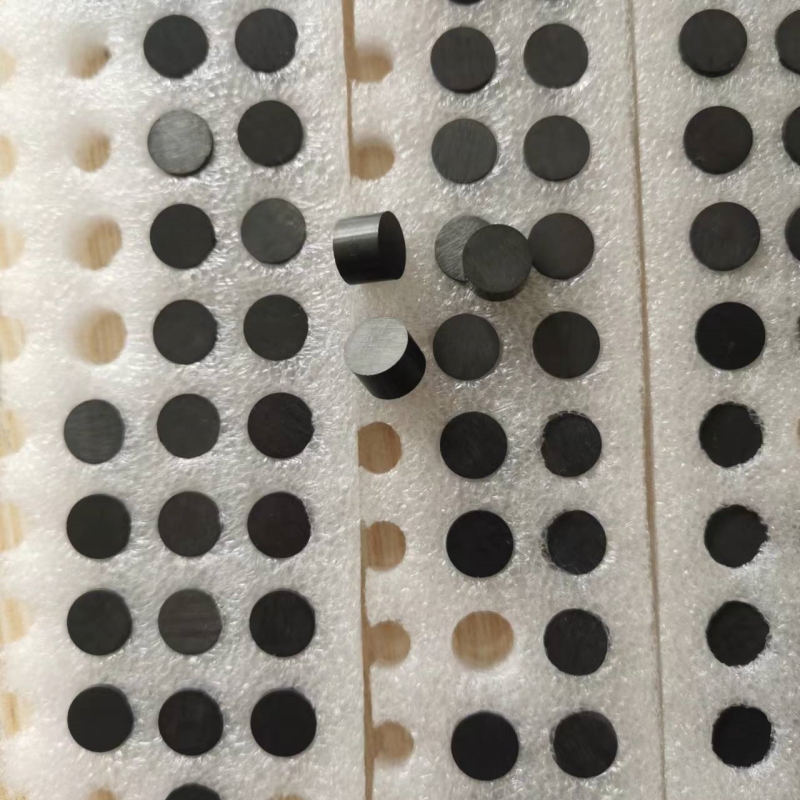
    Macor machinable glass ceramic brings together the flexibility of a strong plastic, the ease of shaping like metal, and the effectiveness of a high-tech ceramic. It is a glass-ceramic hybrid with unique features from both material families. Macor is an excellent electrical and thermal insulator, with good performance in high-temperature, vacuum, and corrosive conditions.
    read more
  • Boron Carbide or Silicon Carbide? How to Select the Optimal Ceramic for Your Needs
    2025-11-19

    Boron Carbide or Silicon Carbide? How to Select the Optimal Ceramic for Your Needs

    The best ceramic for your application is determined by its specific requirements. For many applications, balancing weight, hardness, thermal behavior, toughness, and budget is critical to selecting the best material.
    read more
  • Magnesia-Stabilized Zirconia: Key Advantages for Sintered Plates
    2025-11-13

    Magnesia-Stabilized Zirconia: Key Advantages for Sintered Plates

    Magnesia-stabilized zirconia combines superior thermal shock resistance, high mechanical strength, and excellent chemical inertness, ensuring that precision electronic components remain uncontaminated and secure during the sintering process.
    read more
  • What are the Advantages of the Beryllium Oxide (BeO) Ceramic Plate Used for Terminating Resistor?
    2025-11-07

    What are the Advantages of the Beryllium Oxide (BeO) Ceramic Plate Used for Terminating Resistor?

    Terminating resistors absorb a lot of electricity and dissipate it as heat. BeO's irreplaceable features stem mostly from its remarkable overall performance.
    read more
  • What is Magnesium Oxide Stabilized Zirconia (MgO-ZrO2) Nozzle?
    2025-10-31

    What is Magnesium Oxide Stabilized Zirconia (MgO-ZrO2) Nozzle?

    MgO-ZrO2 nozzles are commonly employed in steel production for continuous casting ladles, converter tundishes, and converter taphole slag retention devices. They are mostly employed in the powder metallurgy business, which involves the smelting of ferrous and nonferrous metal powders such as nickel-based alloy powders, copper powders, stainless steel powders, iron powders, and other superalloy pow
    read more
  • What are the Differences between Alumina Ceramics and Mullite Ceramics?
    2025-10-23

    What are the Differences between Alumina Ceramics and Mullite Ceramics?

    Alumina ceramics are the chosen material for high-wear and chemically hostile situations due to theirs superior hardness, wear resistance, and chemical resilience. Mullite ceramics, on the other hand, have superior thermal stability and resilience to fast temperature swings, making them more suitable for high-temperature structural applications.
    read more
  • What is Active Metal Brazing (AMB) Ceramic Substrate?
    2025-09-26

    What is Active Metal Brazing (AMB) Ceramic Substrate?

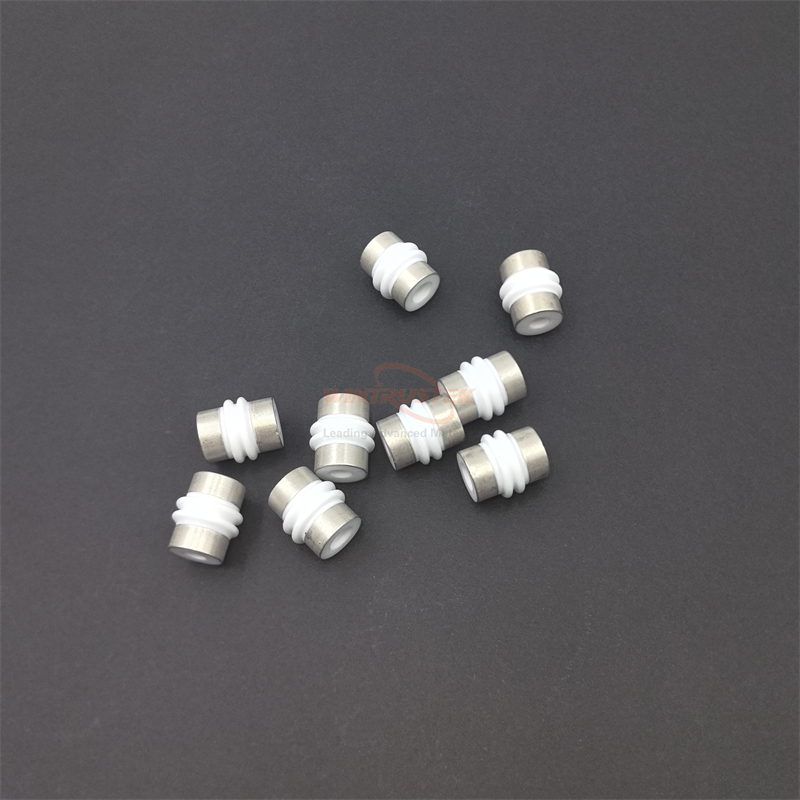
    The process of Active Metal Brazing (AMB) is an advancement of DBC technology. In order to link the ceramic substrate with the metal layer, a small quantity of active elements like Ti, Zr, and Cr in the filler metal react with the ceramic to generate a reaction layer that can be wetted by the liquid filler metal. AMB substrate has a stronger bond and is more reliable since it is based on the chemical interaction of ceramic and active metal at a high temperature.
    read more
  • What are the Advantages of Silicon Carbide(SiC) Grinding Barrel?
    2025-09-19

    What are the Advantages of Silicon Carbide(SiC) Grinding Barrel?

    Silicon Carbide Barrels provide exceptional temperature stability, high-precision grinding results, and remarkable wear resistance. They are therefore the perfect investment for businesses trying to boost their competitiveness in the market and enhance their production procedures.
    read more
  • What is the Boron Nitride Horizontal Continuous Casting Ring?
    2025-09-12

    What is the Boron Nitride Horizontal Continuous Casting Ring?

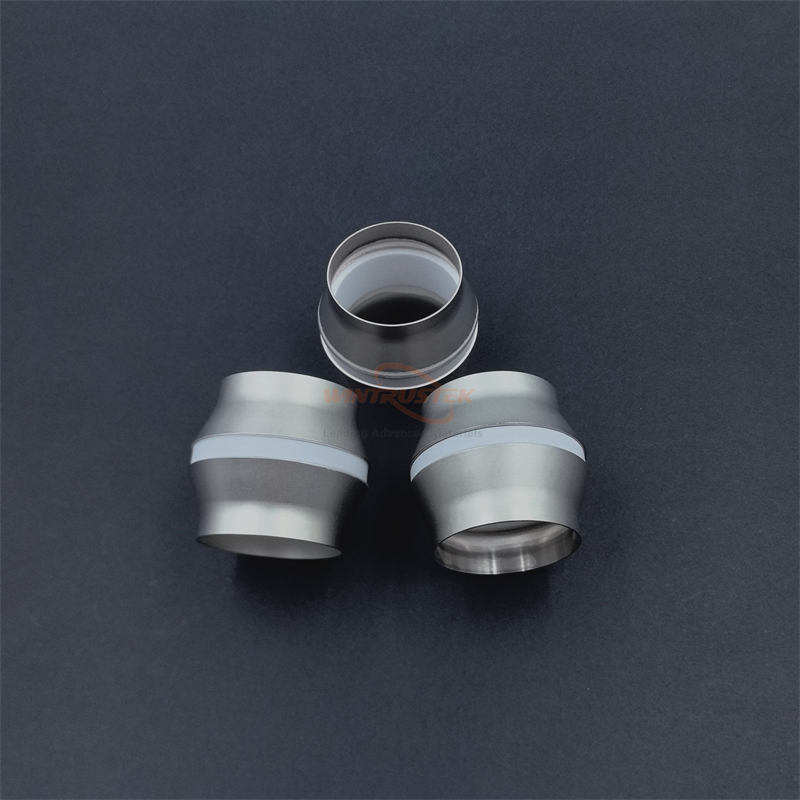
    Break rings, a transitional element between the hot and cool zones of a continuous casting line, are made from hot-pressed boron nitride ceramics that have been machined. This is an important but frequently disregarded step in the casting process. The melt must be able to pass through the break ring and into the solidification zone without adhering. It must also be able to tolerate extreme temperature changes. Break ring failure can be quite expensive. For this reason, materials with low friction coefficients and strong thermal shock resistance are perfect. BN are excellent in this field.
    read more
  • What are the Applications for Lanthanum Hexaboride(LaB6)?
    2025-08-27

    What are the Applications for Lanthanum Hexaboride(LaB6)?

    Lanthanum hexaboride (lanthanum boride, or LaB6) is an inorganic nonmetallic compound made up of low-valence boron and the uncommon metal element lanthanum. It is a refractory ceramic that can survive extreme temperatures and hard conditions. Lanthanum hexaboride ceramic has many applications due to its superior thermal, chemical, and electrical characteristics.
    read more
12345 ... 7 » Page 1 of 7
Copyright © Wintrustek / sitemap / XML / Privacy Policy   

Home

PRODUCTS

About Us

Contact