In today’s high-tech industries ranging from aerospace and medical imaging to semiconductor processing and ultra-high vacuum (UHV) systems, engineers are often confronted with a difficult materials challenge: how to bond sophisticated ceramics to metals.
Ceramics are good electrical insulators, are thermally stable and are corrosion resistant. Metals are ductile, electrically conductive and structurally durable. Together, the two enable engineers to develop durable feedthroughs, sensors and vacuum chambers. However, these two groups of materials are intrinsically distinct in atomic structures and directly connecting them is extremely challenging.
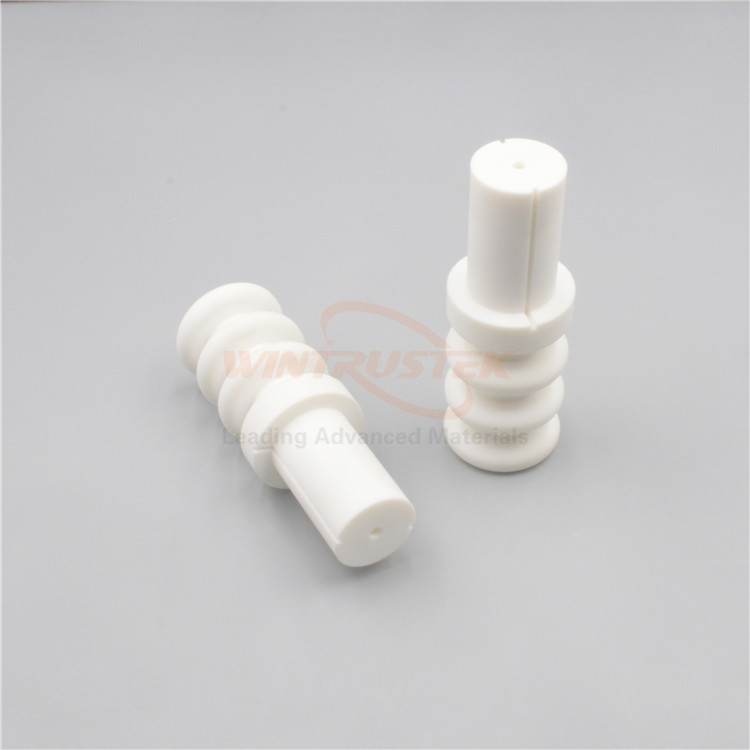
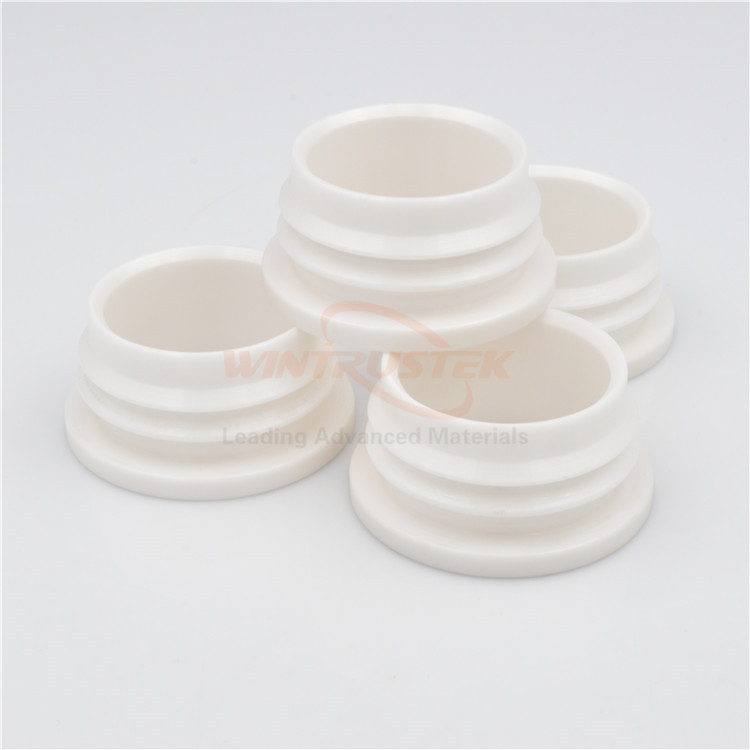
At Wintrustek we bridge that gap. We produce high-performance ceramic parts, and create reliable ceramic-to-metal assemblies which maintain hermetic seals under the most severe heat and vacuum conditions.
This is a science-based guide to ceramic-to-metal brazing, the key issue of thermal expansion mismatch, and how to create a perfect vacuum seal.
1. The Fundamental Problem: Mismatch of the coefficient of thermal expansion (CTE)
The Coefficient of Thermal Expansion mismatch is the single greatest threat to a brazed ceramic-to-metal junction.
Brazing normally is done at higher temps, often 700C to 1000C. At these temperatures both the ceramic and the metal expand. But metals expand at a far faster pace than ceramics.
As the assembly cools from brazing temperature to room temperature, the metal contracts significantly more than the ceramic. This leads to high residual strains at the joint interface:
Tensile Stress on the Ceramic Ceramics are very strong in compression but notoriously weak in tension so that these residual stresses can easily cause the ceramic to micro-crack leading to rapid or delayed vacuum leakage.
Shear Stress at the Interface: The different rates of contraction shear the brazing alloy layer and may induce delamination of the joint.
2. How Industry Deals with CTE Mismatch
So takes some clever metallurgy and design to make a good vacuum seal , and material engineers use a variety of tricks to do so.
A. Choice of Intermediate Transition Metals
Instead of bonding a ceramic directly to ordinary metals such as stainless steel or copper, engineers use “transition metals” that are quite similar to the ceramic in their thermal expansion characteristics.
Kovar (Fe-Ni-Co alloy) is the most suitable material for connecting Alumina (Al2O3) ceramics. Its CTE profile is quite similar to that of Alumina from room temperature to ~450C, which greatly reduces residual cooling stress.
Molybdenum and Titanium: These refractory metals have relatively low CTEs and are therefore good candidates for direct brazing with Silicon Nitride or Aluminum Nitride.
B. Shared geometry and soft filler metals
Thermal stresses are absorbed by the design of the joint itself. Engineers construct the joints as sleeves, laps or tapers, such that the ceramic is in compression rather than tension during cooling, rather than flat butt joints.
Furthermore, ductile braze alloys (e.g. silver copper eutectics) allow the metal junction to bend a little bit in a plastic way, absorbing the stress instead of passing it directly on to the fragile ceramic.
3. The brazing process Making ceramics "wettable"
By nature, molten metals do not wet ceramic surfaces. If you place a drop of liquid metal on a ceramic sheet it will just bead up like water on a waxed automobile. The ceramic surface must be changed to force bonding. There are two main commercial methods:
Method 1: Active Metal Brazing (AMB)
Active metal brazing is the direct addition of highly reactive materials, most often Titanium (Ti), to the silver-copper braze alloy. At brazing temperatures titanium will migrate to the ceramic interface and react with the oxygen or nitrogen in the ceramic (such as Alumina or Silicon Nitride) to generate a thin, wettable reaction layer. This permits the liquid metal to flow and attach directly to the ceramic in one-step vacuum furnace runs.
Method 2: Mo-Mn (Molybdenum-Manganese) Metallization Process
This is a classic very reliable multi-step procedure. A paint-like mixture of molybdenum and manganese powders is applied to the ceramic and burned in a wet hydrogen furnace at about 1400C. The manganese reacts with the glass phase of the ceramic fixing the molybdenum tightly to the surface. Then the molybdenum is electroplated with a thin layer of nickel. The nickel coating is very wettable and allows easy flow and sealing of the junction by conventional non-activated brazing alloys.
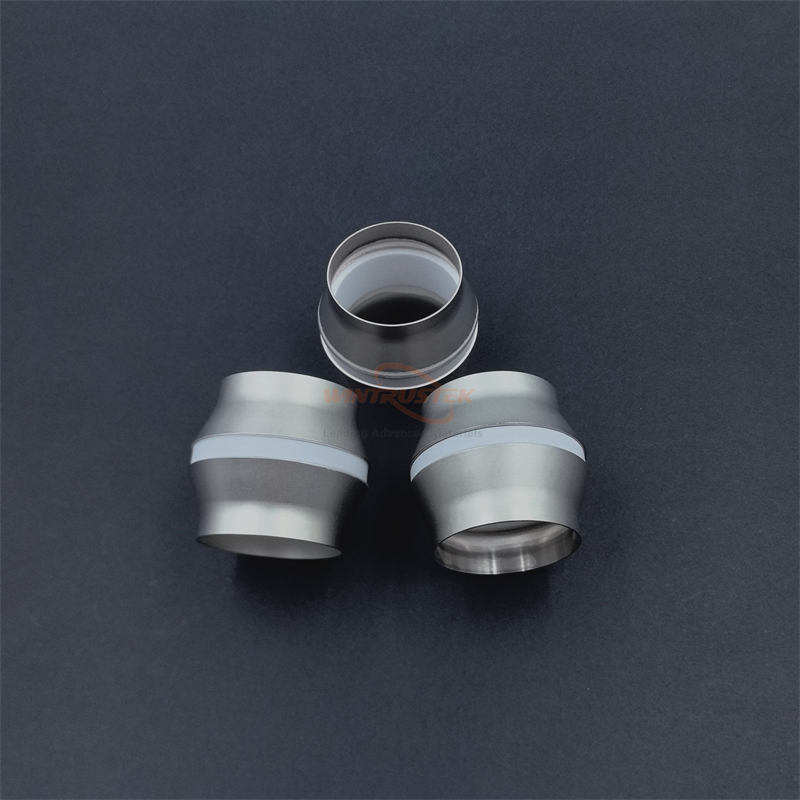
(Ceramic to Metal Brazed Parts produced by Wintrustek)
The Wintrustek Edge: Wintrustek uses both a sophisticated AMB and precision Mo-Mn metallization technologies. Control of the microscopic thickness of the metallization and reaction layers allows brazed ceramic-to-metal assemblies to be produced with ultra-high vacuum hermeticity (leak rates below 1 x 10^-9 atm cc/sec).