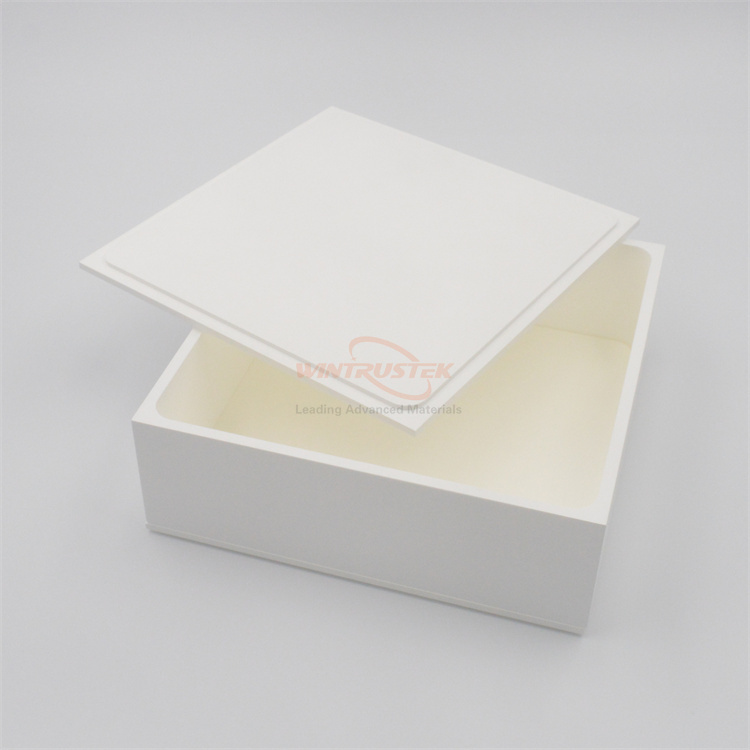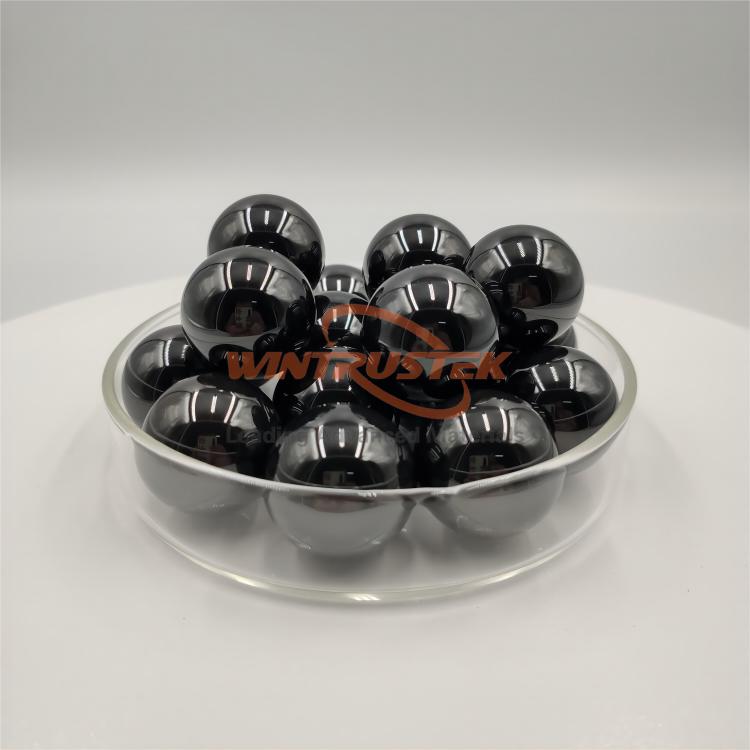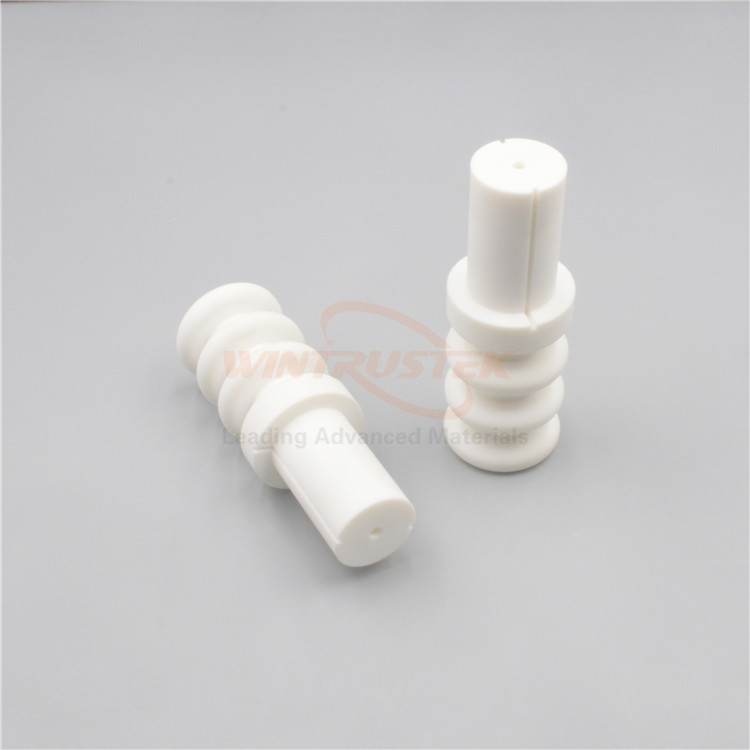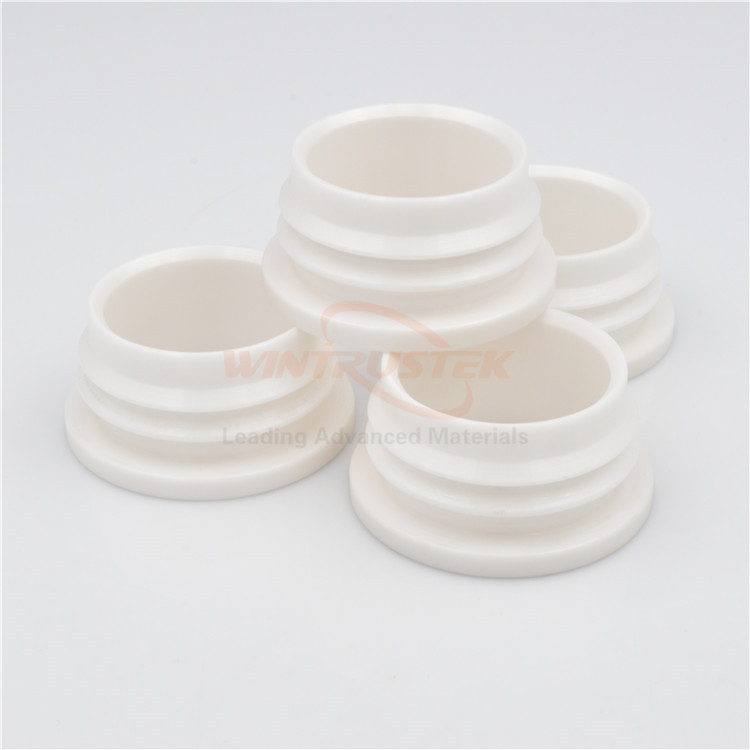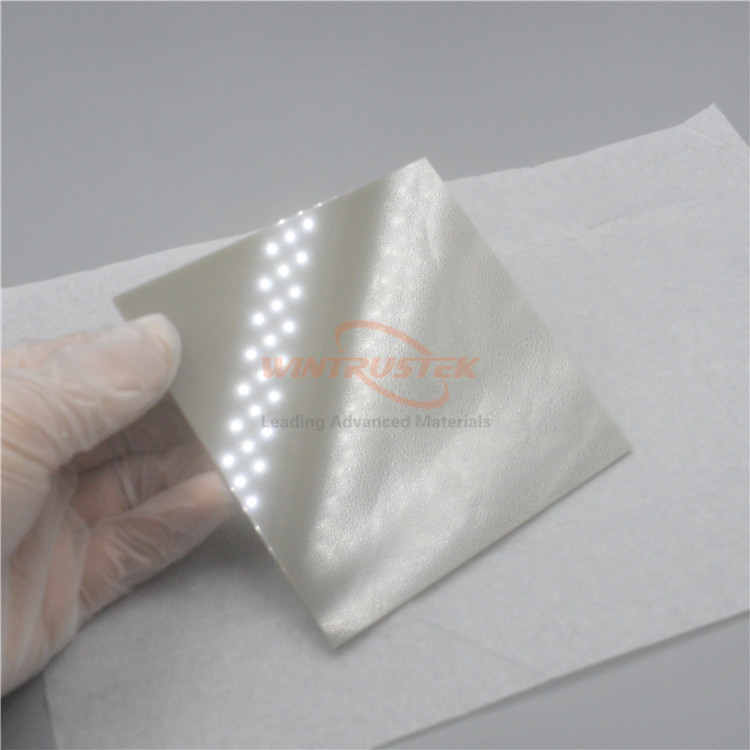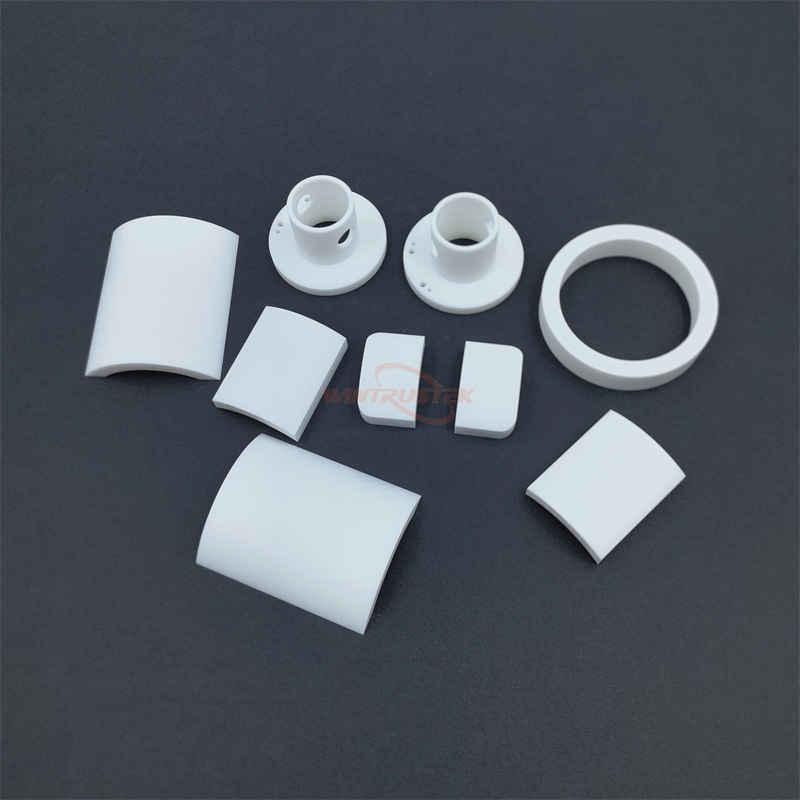
( Macor Ceramic Parts Produced by Wintrustek)
When you get into exotic materials, designing unique parts is almost always a balancing act between extreme performance and manufacturability. When your application demands extreme electrical insulation and thermal stability from a technical ceramic, but your timeline or design complexity pushes traditional manufacturing to its limits, material choice becomes a crucial bottleneck.
Traditional technical ceramic like Alumina (Al2O3) , Silicon Nitride (Si3N4) or Silicon Carbide (SiC) offer the best hardness and wear resistance. But their diamond grinding procedure post-sintering can lead to extended lead times and skyrocketing prototype prices.
That’s where Macor Machinable Glass Ceramic comes in and changes the game. At Wintrustek, we regularly help engineering teams through this very crossroads: when the one-of-a-kind qualities of Macor make it a more desirable option than typical technical ceramics.
Here is a closer look at some of the specific cases, such as urgent prototyping and complicated micromachining, where Macor gives a considerable edge.
1. Quick Prototyping and Tight R&D Schedules
R&D (Research and Development) - In this phase, speed to market is crucial. Conventional technical ceramics require either considerable investment in specific purpose molding dies or intensive diamond-tool grinding for weeks after firing. If a prototype design fails or requires a small adjustment, the entire costly and time-consuming production cycle must be restarted from scratch.
Macor reduces this bottleneck completely. It has a unique microstructure of interlocking mica flakes, and may be machined by typical metalworking tools (high-speed steel or carbide cutters) on standard CNC mills and lathes.
The Wintrustek Difference: If you’re under severe time constraints to test a new component, Macor allows Wintrustek to accelerate your project from blueprint to actual prototype in a quarter of the time. The machine shop may make changes on the fly, reducing your engineering iteration cycles from months to days.
2. Accurate micromachining of complex geometries
As industrial components get smaller, the demand for complicated micromachining has exploded. Conventional advanced ceramics are very prone to chipping, micro-cracking and structural failure under complex cutting stresses, making features such as ultra-fine threads, deep blind holes or thin walls extremely difficult, if not impossible, to manufacture.
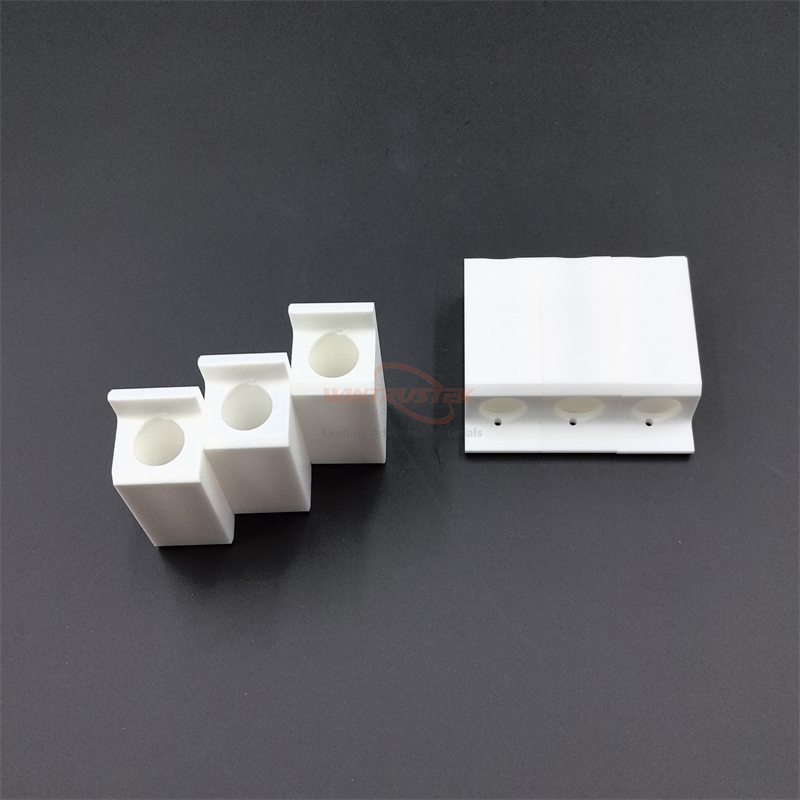
( Macor Ceramic Parts Produced by Wintrustek)
Macor is really good where hard ceramics break. The microcrystalline structure naturally impedes the propagation of microcracks during machining. This enables for very detailed and delicate designs including:
·Ultra-fine internal and exterior threads
·Complex arrays of small microholes
·Intricate, thin-walled structures
·Tight dimensional tolerances
When your application requires complicated geometries that push the limits of standard ceramic processing, Macor is the way to go to achieve geometric perfection without sacrificing the critical benefits of ceramic insulation.
3. High vacuum, high voltage, clean room environments
One widespread misperception is that Macor is easy to machine hence cannot have the premium performance qualities of technical ceramics. In fact Macor performs quite well in specialized contexts.
Unlike plastics or composites that outgas and contaminate pristine settings, Macor is entirely non-porous and no outgassing. This makes it an excellent choice for:
·Ultra High Vacuum ( UHV ) Systems
·Semiconductor manufacturing equipment
·Laboratory and medical diagnosis
As an electrical insulator it is also excellent, even at high voltages and high frequencies, with a maximum continuous operating temperature of 800°C (and a peak no-load temperature of 1000°C). Although alumina can endure far higher temperatures, Macor is more than adequate for the great majority of aerospace, electrical and vacuum chamber applications.
Summary: Technical Ceramics versus Macor Decision Matrix
To help you choose the right materials, Wintrustek has listed the basic operating trade-offs below:
| Feature / Requirement | Traditional Technical Ceramics (Al2O3, Si3N4) | Macor Machinable Glass Ceramic |
| Machining Tooling | Requires expensive diamond-wheel grinding | Uses standard metalworking tools (CNC milling/turning) |
| Prototyping Speed | Slow (typically weeks to months due to sintering/grinding) | Extremely Fast (days; ideal for rapid turnarounds) |
| Geometric Complexity | Restricted to simpler shapes or high-cost custom grinding | Virtually limitless (supports fine threads, thin walls, micro-holes) |
| Hardness & Wear Resistance | Extremely High (Excellent for abrasive or heavy load use) | Moderate (Easier to scratch, not meant for heavy mechanical wear) |
| Max Temperature | Very High (1600°C - 1800°C+) | Moderate-High (Continuous use up to 800°C) |