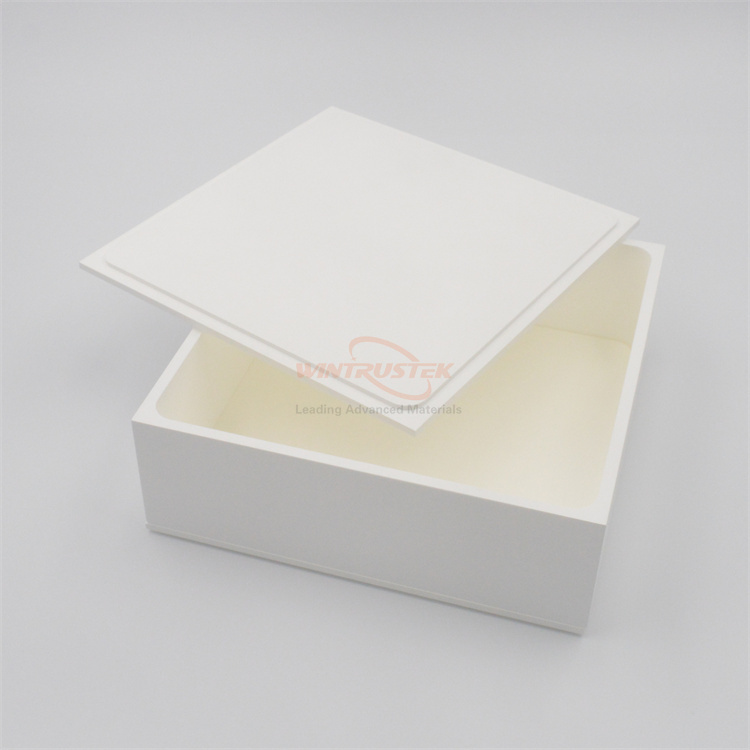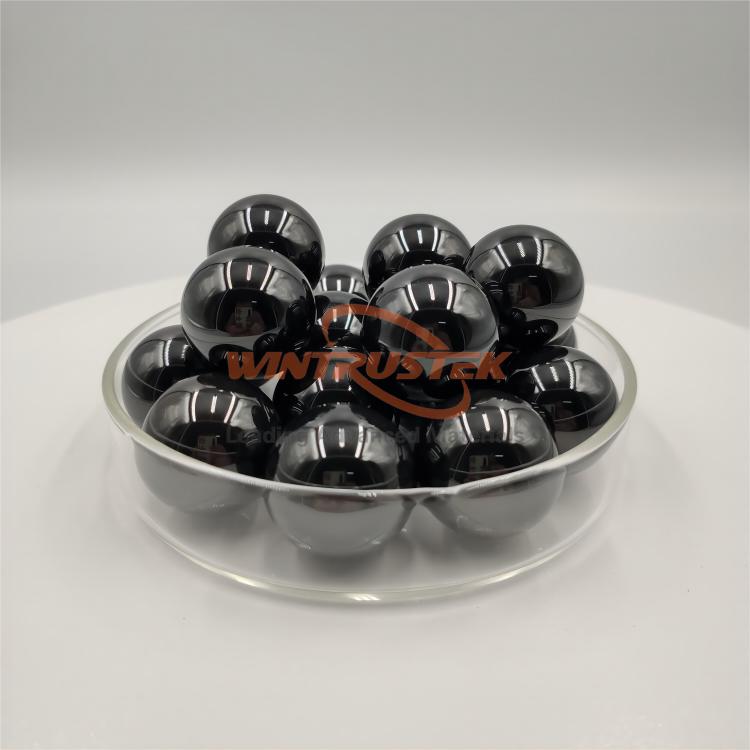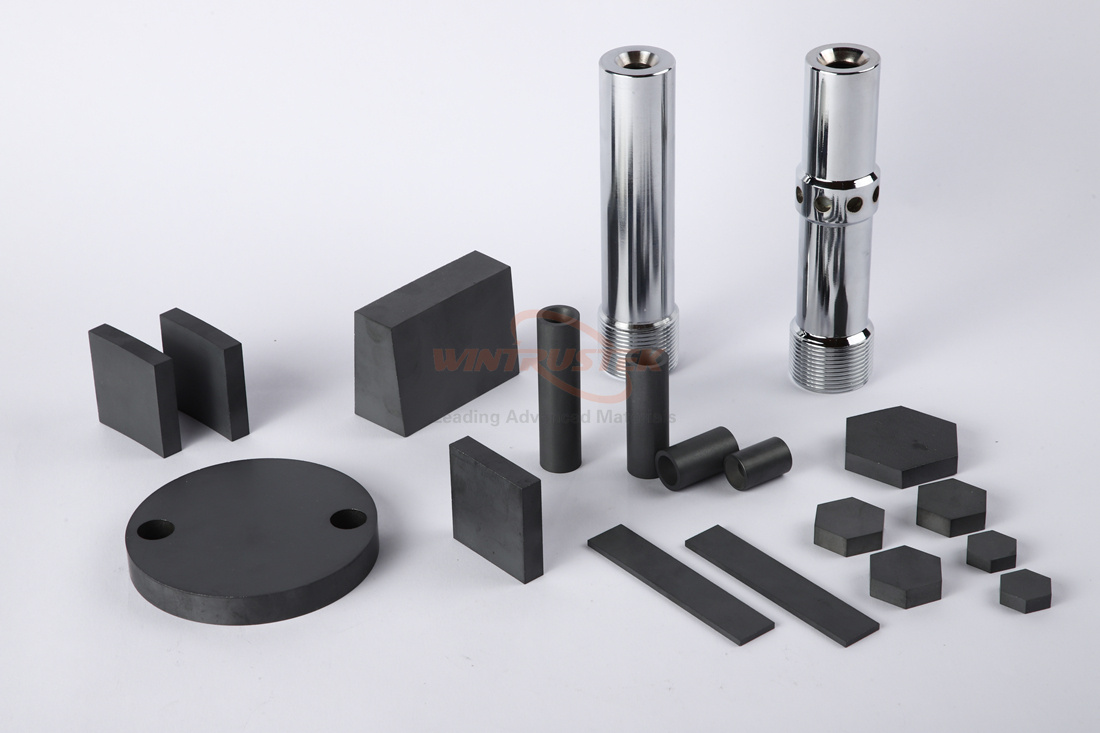
(Boron Carbide Ceramics Produced by Wintrustek)
Boron carbide ceramic (B4C) is a high performance non-oxide ceramic material. It is characterized by high hardness, low density, strong wear resistance and chemical stability. These qualities make it excellent for use in ballistic protection, wear-resistant parts, sandblasting nozzles, sealing parts, and neutron absorption parts in the nuclear industry.
For practical purposes boron carbide is not hardness dependent only. Its value is derived from its hardness, lightweight, wear resistance, corrosion resistance and thermal stability combined.
Boron carbide is one of the hardest of all ceramic materials, with hardness approaching that of diamond and cubic boron nitride . This high hardness allows it to efficiently withstand abrasive wear, particle erosion and surface friction.
Hence, boron carbide ceramic is suitable for high-speed abrasive particles, powder flow, sandblasting, and severe sliding wear applications.
One of the most important benefits of boron carbide ceramic is its low density . Compared to several other engineering ceramics such as alumina and silicon carbide, boron carbide has a distinct advantage in weight.
This makes it particularly useful in light-weight protection systems, aircraft related components and mobile protective equipment. In the field of ballistic protection, one of the important design requirements is frequently to reduce the weight without compromising the protective function.
The boron carbide ceramic has a strong chemical stability at room temperature and can resist numerous acidic, alkaline and corrosive conditions. Wear and corrosion applications can also benefit from the use of boron carbide to enhance the dependability and service life of components.
Boron carbide includes boron, notably the boron-10 isotope, hence it has a considerable neutron absorption capability. It is used in the nuclear industry for neutron shielding, control materials, absorber plates and the like.
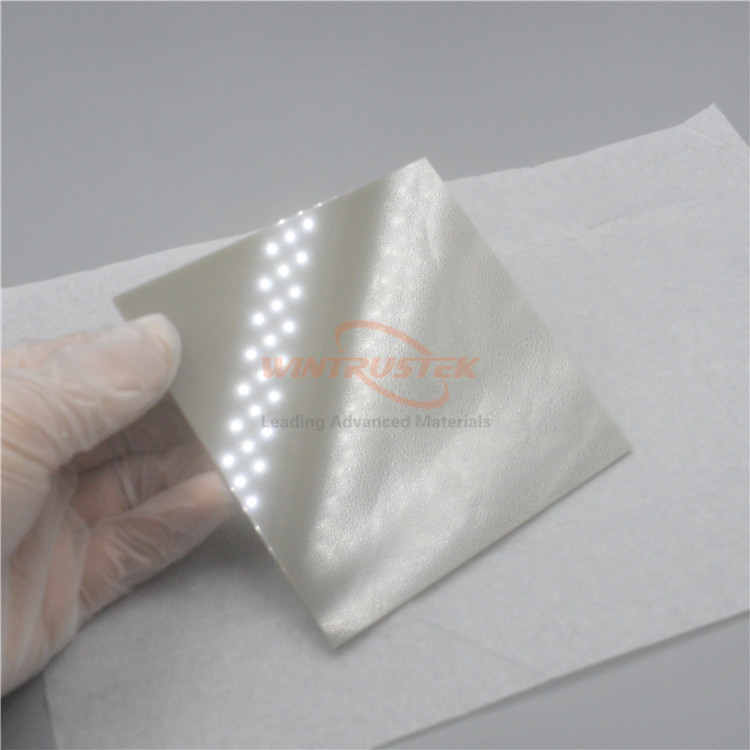
Boron carbide ceramic is extensively employed in lightweight armor systems as for instance in body armor plates, vehicle armor panels and aerospace protective structures. Its low density allows the overall weight to be reduced, while its great hardness helps to damage or weaken high-speed projectiles.
In these applications boron carbide ceramic is commonly coupled with fiber composites, metal backer plates or other supporting elements to provide superior overall impact resistance.
In sandblasting, shot blasting and surface treatment operations, nozzles are continuously subjected to a stream of high speed abrasive particles. This wears the nozzle material to an extreme degree.
Boron carbide ceramic is used for sandblasting nozzles, jet tubes and flow directing components due to its high hardness and wear resistance. Boron carbide nozzles often have a longer service life in extremely abrasive settings compared to some metals or traditional ceramic materials.
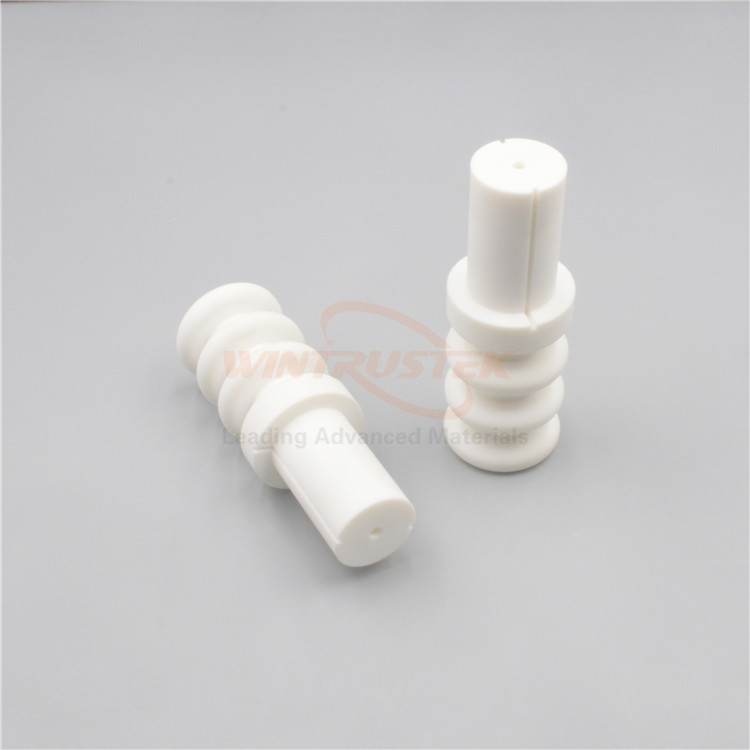
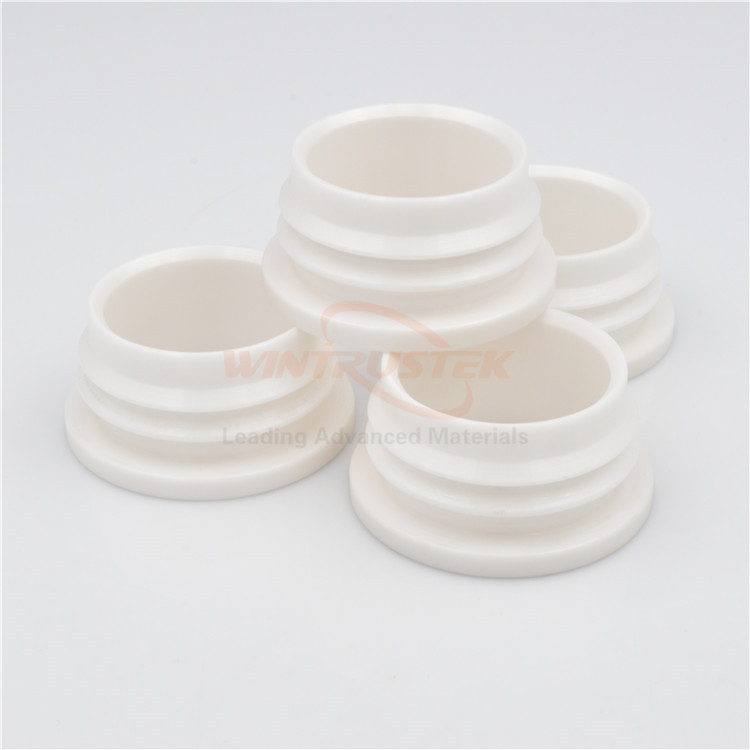
Particle erosion, sliding wear or corrosive wear is a problem for many parts used in powder handling, mining, chemical processing and mechanical equipment . Boron carbide ceramic can be used as wear liners, seal rings, bushings and valve components.
For applications requiring wear resistance, dimensional stability, and chemical resistance, boron carbide is a high-performance material choice.
Boron carbide ceramic is also used in nuclear-related applications due to its neutron absorption capacity. Typical components are shielding pieces, control materials and neutron absorber panels.
These applications typically need stringent control of purity, microstructure, dimensional accuracy and long term stability.
Boron carbide ceramic is a new kind of ceramic material with high hardness, low density, good wear resistance and chemical stability. It is a commonly used material for demanding applications such as protective armor, sandblast nozzles, wear resistant parts and neutron absorption assemblies.
Through the selection of materials and design of products, the performance advantages of boron carbide ceramic may be fully utilized, and the service stability of components can be improved in severe working environments.