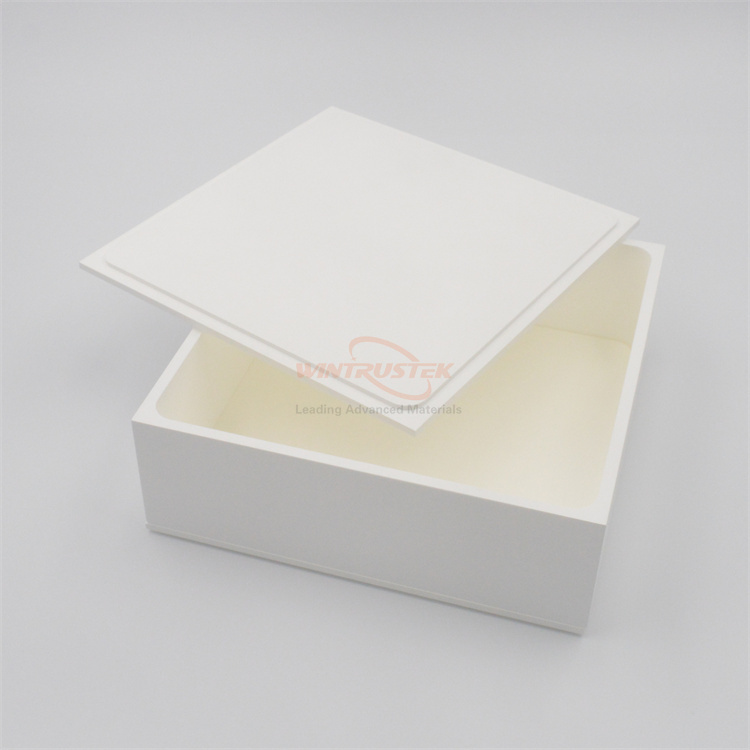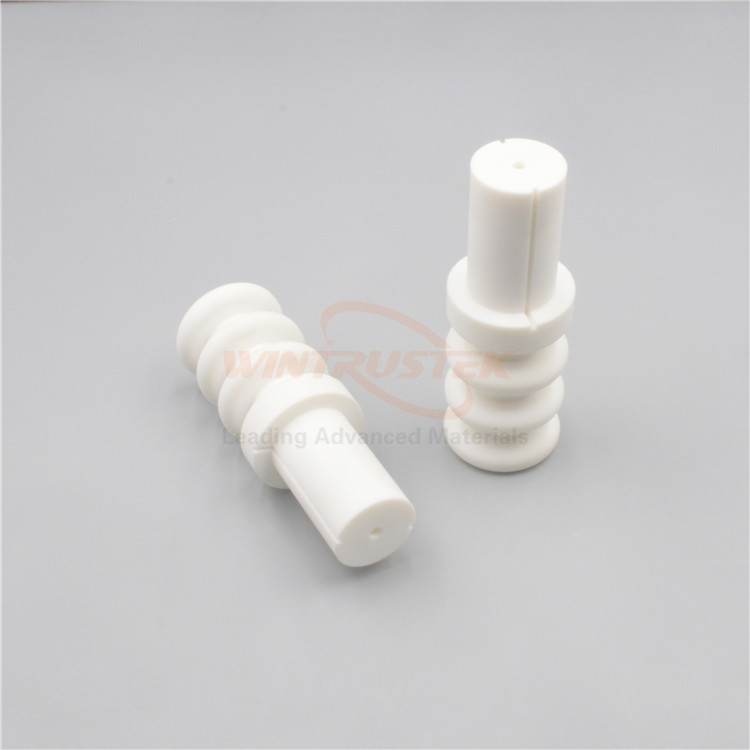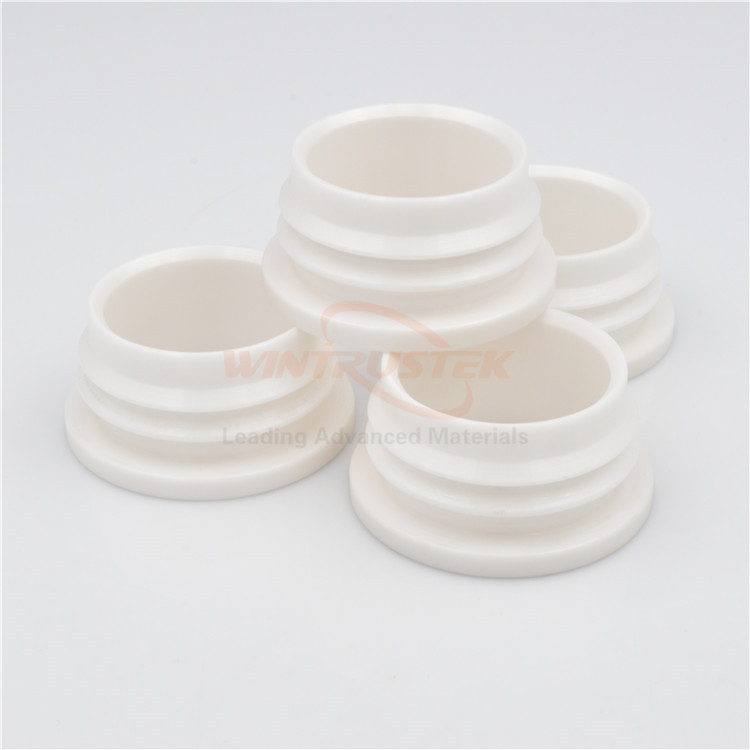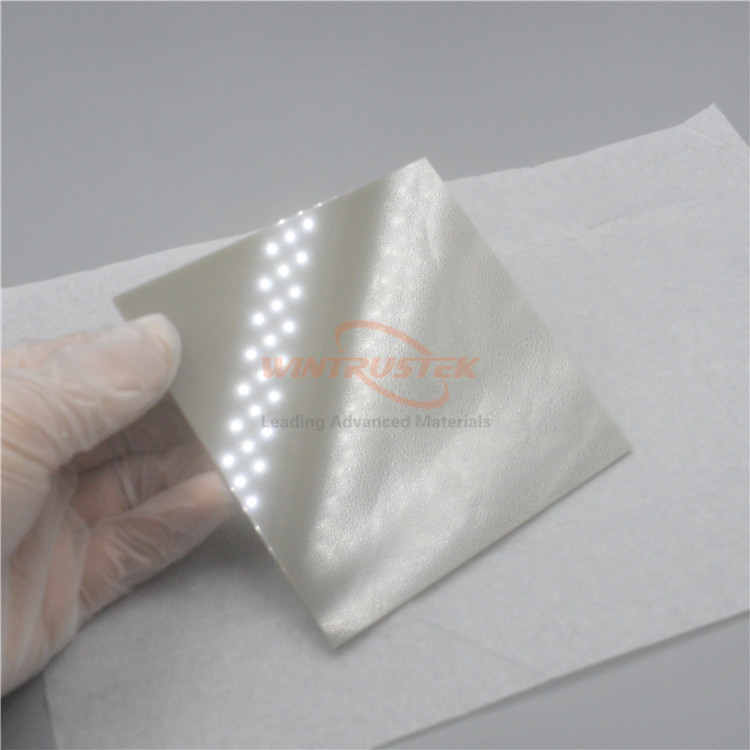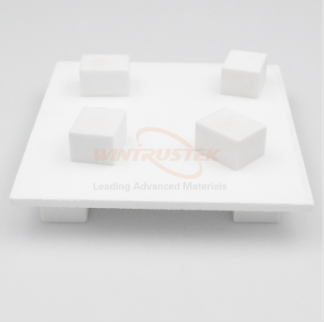
(99.5%Alumina Setter Plate Produced by Wintrustek)
In metal injection molding (MIM), the sintering stage is critical to final part quality, including dimensional accuracy, surface finish, and batch consistency. Besides feedstock formulation, debinding conditions, sintering profiles, and furnace atmosphere control, the performance of the setter plate also significantly affects sintering results, as it must support the parts while maintaining structural and surface stability under repeated thermal cycling, high temperatures, and complex atmospheres.
Among ceramic materials, 99.5% alumina setter plates have attracted broad attention in MIM applications due to their high-temperature resistance, mechanical strength, dimensional stability, and cost-effectiveness.
1. Special Requirements of MIM Processes for Setter Plates
Compared with general heat treatment or standard firing applications, MIM places more demanding and more comprehensive requirements on setter plates.
High-Temperature Resistance and Thermal Stability
MIM sintering is typically carried out at elevated temperatures, so setter plates must remain stable under long-term heat exposure and repeated thermal cycling without deformation, cracking, or thermal shock damage. In industrial production, long-term thermal stability is often more critical than short-term heat resistance.
Flatness and Dimensional Stability
Because MIM parts undergo significant shrinkage during sintering, any warpage or loss of flatness in the setter plate can affect part support and lead to dimensional deviation or defects. Therefore, setter plates must maintain accurate geometry and stable flatness over repeated use.
Chemical Inertness
MIM processes may involve vacuum or protective and reducing atmospheres such as nitrogen, hydrogen, or dissociated ammonia. The setter plate material should remain chemically stable and minimize unwanted interaction with parts, binder residues, and furnace atmospheres to reduce contamination, sticking, or surface defects.
Mechanical Strength and Service Life
Setter plates are repeatedly subjected to handling, loading, stacking, and thermal cycling in production. Adequate mechanical strength and durability are essential to reduce breakage and maintain cost-effective service life.
Stable Surface Condition
The surface condition of the setter plate directly affects the contact surface quality of the part. Unstable roughness, contamination, or surface degradation can lead to marks, sticking, or local defects. For MIM production with high repeatability requirements, surface stability is therefore an important consideration.
2. Main Advantages of 99.5% Alumina
Alumina ceramics are among the most widely used advanced ceramic materials in industrial applications. Within this material family, 99.5% alumina offers a good balance between purity, performance, and cost. In MIM setter plate applications, its advantages are mainly reflected in the following aspects.
Good High-Temperature Performance
99.5% alumina exhibits strong resistance to elevated temperatures and is suitable for many conventional high-temperature industrial sintering conditions. Under proper design and controlled use, it can maintain relatively stable phase composition and structural integrity at high temperatures, making it a practical support material for many MIM processes.
High Hardness and Wear Resistance
Alumina ceramics have high hardness, allowing them to perform well under repeated furnace loading, unloading, and frictional contact. For reusable setter plates, this characteristic helps reduce surface wear and maintain more stable contact conditions over time, which contributes to longer service life.
Good Dimensional Stability
99.5% alumina generally resists deformation well at elevated temperatures. This is especially important in MIM applications where flatness, support reliability, and process consistency are critical. In processes sensitive to part warpage, a stable setter plate can improve repeatability.
Good Chemical Stability
In many common sintering environments, 99.5% alumina offers good chemical inertness. When matched appropriately with the process conditions, it can help reduce the risk of contamination caused by material reactions. This stability is one of the key reasons for its broad industrial use.
Favorable Cost-to-Performance Balance
Compared with higher-purity alumina, zirconia, or certain specialty composite ceramics, 99.5% alumina often provides a more attractive overall balance between performance and cost.
3. Typical Application Scenarios
Although 99.5% alumina has strong overall performance, its suitability should always be evaluated against actual process conditions. It is often a good choice in the following situations:
MIM processes requiring good flatness and dimensional consistency
Production environments involving repeated use and long service life requirements
Applications seeking a balance between performance and cost
Conventional or medium-to-high temperature MIM sintering conditions
In these cases, 99.5% alumina setter plates can often provide stable support and good overall process compatibility.
4. Selection Recommendations
From an engineering perspective, setter plate selection for MIM should be based on multiple factors rather than a single material property. Key considerations include:
Sintering temperature and thermal cycle conditions
Furnace atmosphere
Part material, geometry, and loading method
Requirements for flatness, service life, and surface quality
Overall purchase and operating cost
Overall, 99.5% alumina setter plates are a practical and well-balanced option for many MIM applications. Their value lies in stable performance, broad applicability, and reasonable cost, especially in production environments that require consistency, repeated use, and cost control.