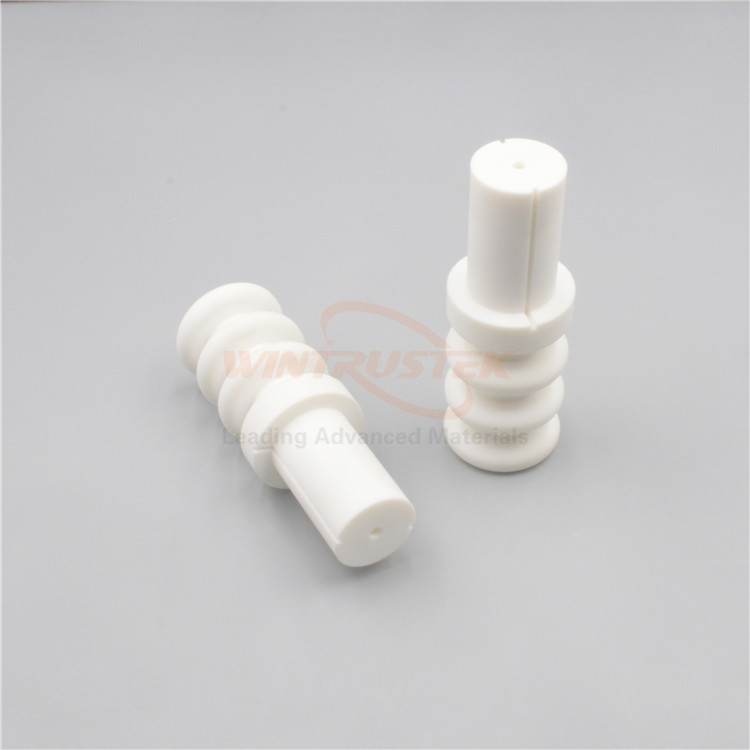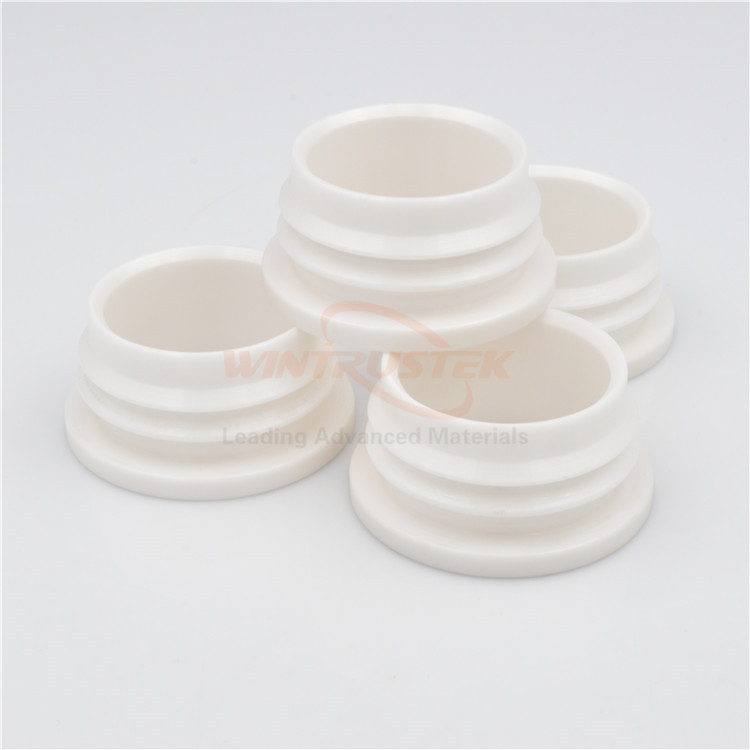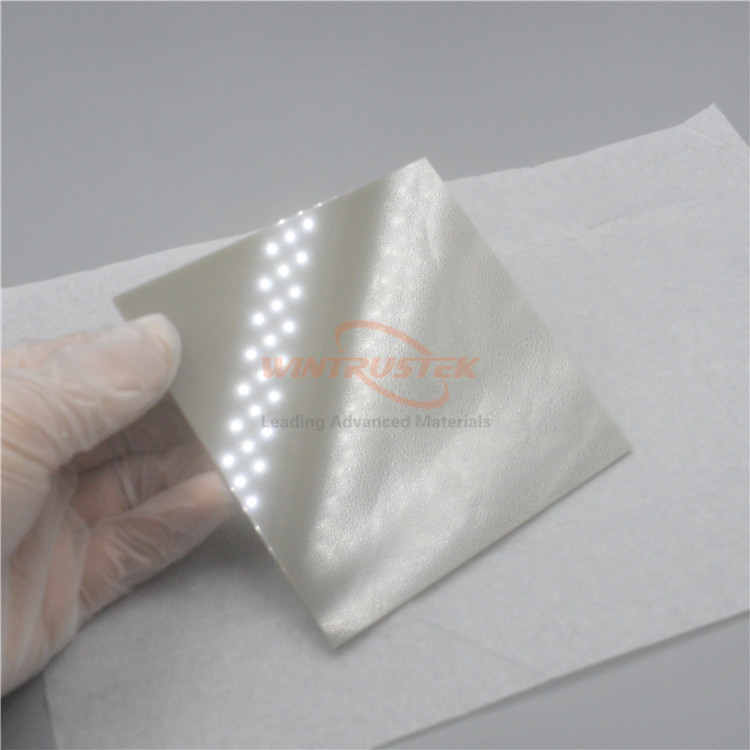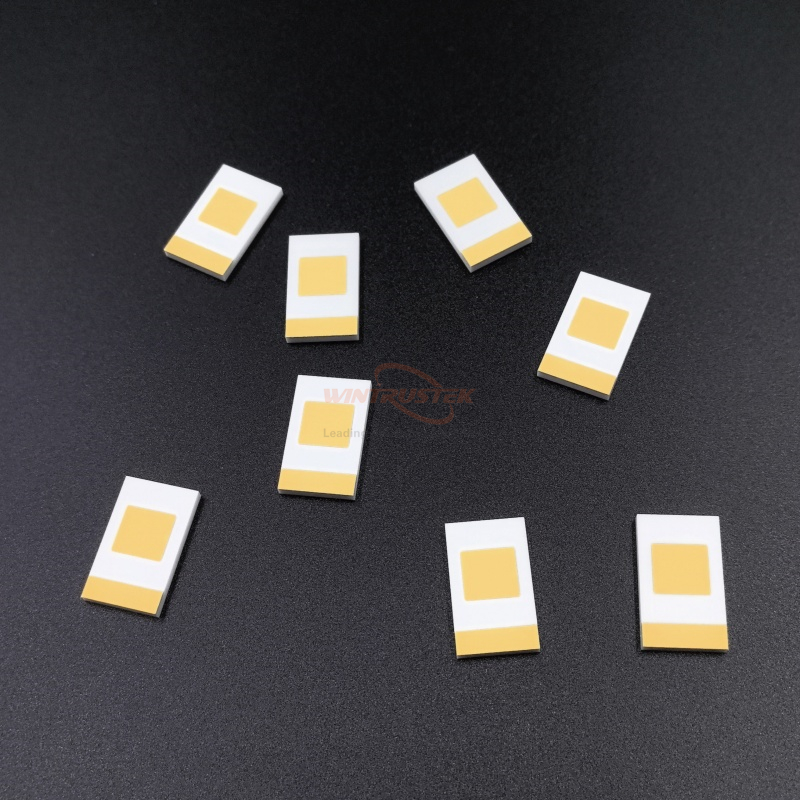
(Metallized Ceramic Produced by Wintrusetk)
Ceramic metallization is the technique of depositing a highly adherent metal coating onto a ceramic surface. This is a vital step since ceramics are inherently unwettable to solder. The metallized layer makes them solderable, providing the necessary foundation for forming strong ceramic-to-metal connections.
Below is an overview of the four primary methods used in the industry today.
1. Molybdenum-Manganese (Mo-Mn) Method: The Industrial Standard
The Mo-Mn process is the most frequently used and well-established ceramic metallization technology. Since the mid-twentieth century, it has been the standard method for producing high-reliability seals in vacuum electronics and aerospace applications.
Process Principle: preparing a slurry of refractory molybdenum powder, manganese powder, and activators (e.g. Al2O3, SiO2, and CaO) in an organic binder. This slurry is applied to the ceramic surface and sintered at high temperatures (1300-1600°C) in a humid hydrogen environment (dew point = +30°C).
Advantages: It offers high sealing strength (reaching up to 60.2±7.7 MPa with the activated method) and excellent vacuum tightness (with a leakage rate as low as 2.3×10⁻¹¹ Pa·m³/s). The process allows for multiple rework cycles and benefits from a wide, forgiving process window.
Limitations: High sintering temperatures may alter ceramic characteristics. The process necessitates huge hydrogen furnace equipment, resulting in a long cycle time. Furthermore, it is incompatible with non-oxide ceramics such as AlN in the absence of a pre-oxidation process.
2. Co-firing Method: Enable Multilayer Wiring
The co-firing method incorporates metallization directly into the ceramic sintering process. The main premise is "co-firing of green ceramic," which involves screen-printing a refractory metal paste (such as tungsten, molybdenum, or molybdenum-manganese) onto unfired (green) ceramic sheets. These sheets are then bonded and fused together to complete both ceramic densification and internal metallization in one step.
3. Direct Bonded Copper (DBC) is Optimized for Power Dissipation
Direct Bonded Copper (DBC) was developed in the 1970s and originally commercialized by GE in the United States. It has now become the standard technology for high-power IGBT modules and LED heat dissipation substrates. This process includes directly bonding a copper foil to a ceramic substrate, resulting in a structure with high heat conductivity and electrical insulation.
4. Active Metal Brazing (AMB): The One-Step Sealing Revolution
Active Metal Brazing (AMB) is a significant innovation that combines metallization and brazing into a single, simplified process. This is accomplished by introducing active elements, such as Ti, Zr, Nb, or V, directly to the brazing filler metal. At high temperatures, these elements chemically react with the ceramic to generate a reaction layer with a metallic bond structure. Examples include TiO, TiN, and Cu3Ti3O. This layer allows the brazing filler metal to moisten the ceramic surface directly.
Process characteristics:
Simplified Workflow: Eliminates the need for a separate pre-metallization step.
Lower Processing Temperatures: Brazing occurs at relatively low temperatures (800–950°C).
Controlled Atmosphere: Perform in a vacuum or high-purity inert atmosphere to prevent oxidation of active components.
Material Versatility: Suitable for ceramics such as Al2O3, AlN, and Si3N4.