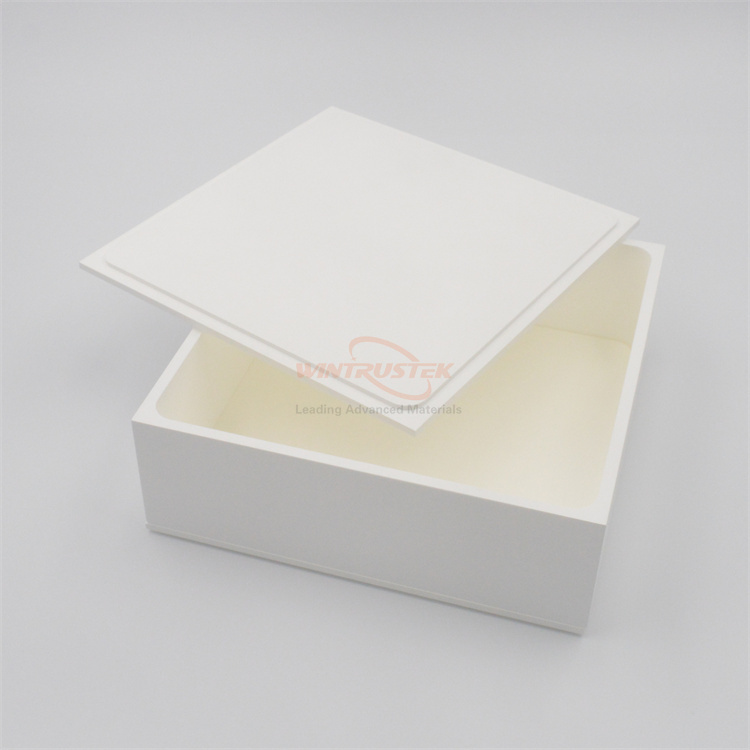
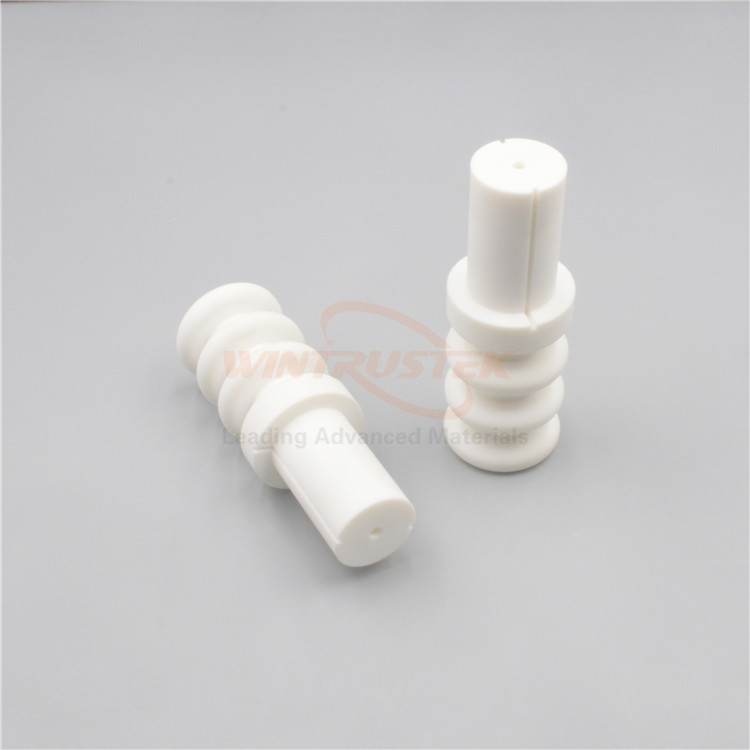
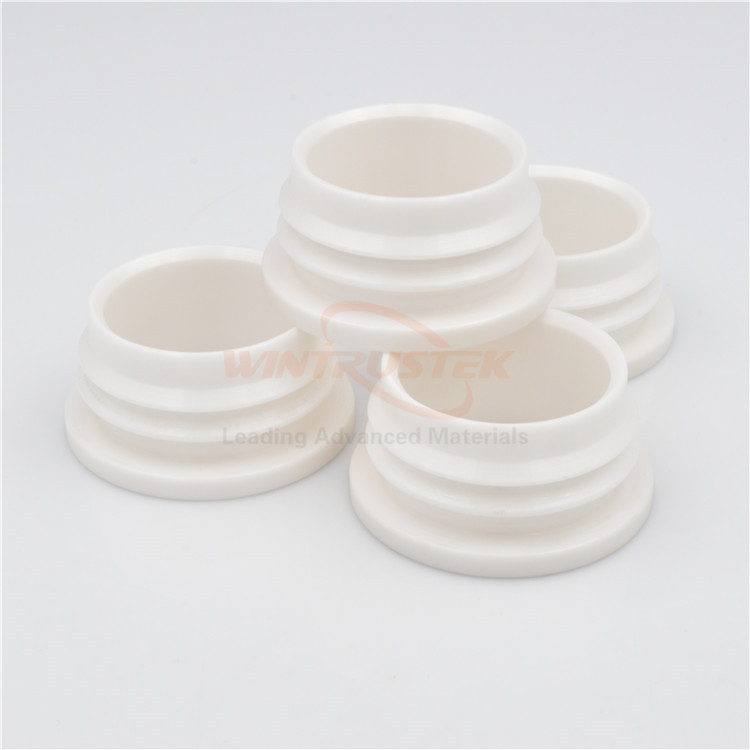
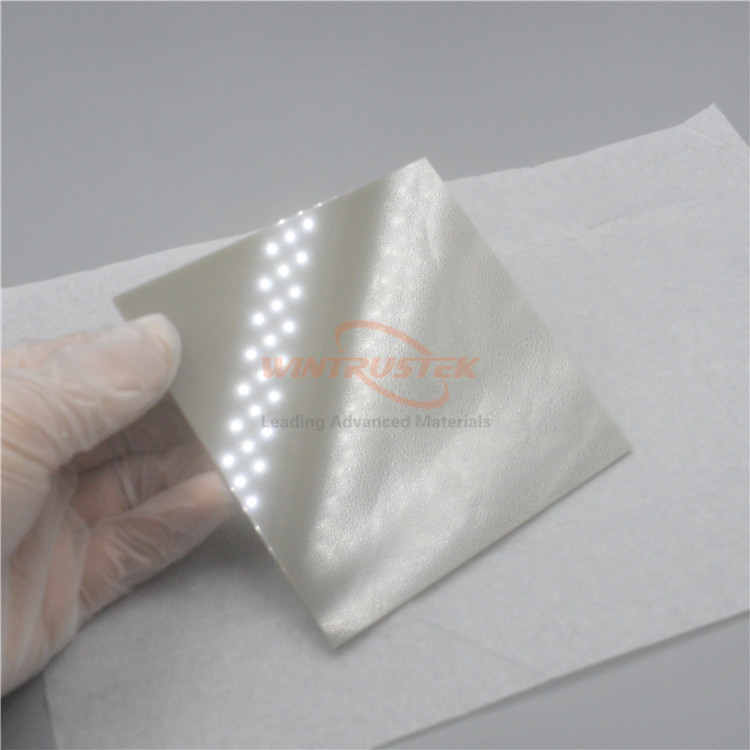
(Ceramic to Metal Assmebled Part Produced by Wintrustek)
I.Overview of Ceramic-to-Metal Welded Components
Ceramic-to-metal welded components are useful structural parts that use sophisticated welding procedures to provide high strength, high gas tightness, and dependable electrical/thermal connections between ceramic and metal materials. They are commonly employed in applications that need resilience to high temperatures, pressures, or vacuum conditions.
II. Active Metal Brazing Technology
1. Key Technical Principles
Active metal brazing uses reactive elements (titanium, zirconium, hafnium, vanadium, etc.) in the brazing filler to chemically react with ceramics, resulting in a chemically bonded layer at the ceramic-metal interface. These active elements have a great attraction for oxygen, nitrogen, and carbon. Heating in a vacuum or inert atmosphere creates nanoscale reaction layers (e.g., TiO₂, TiN, TiC) on ceramic surfaces. This allows for soaking by the molten filler metal, resulting in a reliable "ceramic-reaction layer-braze joint-metal" bond.
2. Key Process Parameters
2.1 Brazing Filler Metal System:
Ag-Cu-Ti: Industry standard, excellent comprehensive performance
Cu-Ti: Lower cost, high-temperature resistance
Au-Ni-Ti: High reliability, aerospace applications
Silver-Free Solder: For electronic devices requiring silver migration prevention
2.2 Process Control:
Environmental Requirements: High vacuum (<10⁻³ Pa) or high-purity inert gas
Temperature Control: 20–50°C above solder liquidus (800–900°C for Ag-Cu-Ti system)
Time Control: Several minutes to twenty minutes, balancing reaction completeness and interface layer thickness
2.3 Process:
Pre-treatment: Precision cleaning of ceramics and metallization treatment; removal of oxide layers from metal components
Assembly: Precise assembly of ceramics, metal components, and active solder foil (0.05-0.2 mm)
Vacuum Brazing: Evacuation → Programmed heating → Holding temperature → Controlled cooling
Post-treatment: Cleaning and preliminary inspection
III. Helium Mass Spectrometer Leak Detection Technology
1. Necessity of Leak Detection
Ceramic-metal welded components are employed in high-demand applications such as vacuum systems and aerospace equipment. Verify that they fulfill near-"absolute sealing" criteria (leak rates<10⁻¹⁰ Pa·m³/s). Leak detection with a helium mass spectrometer is currently the most sensitive and reliable quantitative testing approach available.
2. Detection Principle
Using helium as the tracer gas, the approach takes advantage of its small molecular size, inert nature, and low background concentrations. Helium enters the mass spectrometer through a leak, is ionized, separated by a magnetic field, and detected by a specialized detector. The signal strength is proportional to the helium content, allowing for exact leak rate calculations.
3. Main Detection Methods
Method 1: Sniffing Method (Local Leak Detection)
Procedure:
The interior of the workpiece is evacuated and connected to the leak detector.
The external weld area is scanned with a helium spray gun.
Signals are monitored in real time to precisely locate leak points.
Characteristics: Suitable for locating leaks in small components, high sensitivity.
Method 2: Helium Hood/Enclosure Method (Overall Seal Integrity Assessment)
Procedure:
The workpiece is filled with helium and placed inside a vacuum hood, or an external hood/sniffer is used for detection.
Accumulated or escaping helium is detected.
Characteristics: Measures the total leak rate; suitable for complex structural components.
4. Operational Workflow (Using the Sniffing Method as an Example)
4.1 Preparation Phase:
Workpiece cleaning, equipment calibration, and confirmation of environmental helium background.
4.2 Detection Implementation:
The workpiece is connected to the leak detection system and evacuated to the operating pressure.
Helium spraying begins when the system pressure reaches ≤0.1 Pa (spray gun distance: 1–2 cm, pressure: 0.1–0.2 MPa).
Systematic scanning along the weld seam, with focus on areas of concentrated thermal stress.
4.3 Data Analysis:
An alarm is triggered if the leak rate exceeds the threshold (e.g., 1×10⁻⁹ Pa·m³/s).
Leak points are marked, and detection conditions and data are recorded.
4.4 Re-inspection and Reporting:
Re-testing after repairs, followed by the generation of a complete test report.
5. Special Considerations and Standards
Ceramic-Specific Adaptations: Focus on detecting microcrack regions caused by thermal expansion mismatch.
Sensitivity Grading: Selected based on the application field; aerospace-grade requirements may reach levels as stringent as 10⁻¹² Pa·m³/s.
Standard Compliance: Adherence to national/military standards, ASTM, or industry-specific specifications.
Failure Analysis: Microstructural analysis, such as metallographic sectioning and scanning electron microscopy (SEM), for leak points exceeding standards.
Wintrustek will conduct helium leak test for every ceramic to metal parts. Please check below link for referring to our leak rate test:
https://youtu.be/Et3cTV9yD_U?si=Yl8l7eBH5rON7I_f
IV. Typical Application Scenarios
Power Electronics Packaging: Connection between ceramic substrates (AlN/Al₂O₃) and copper layers in IGBT modules.
Vacuum System Components: Ceramic-to-metal seals in particle accelerators and semiconductor equipment.
Aerospace: Engine sensors and spacecraft sealing windows.
Energy and Optoelectronics: Fuel cell interconnects and high-power laser packaging.
V. Summary
Active metal brazing is the foundational method for producing dependable ceramic-to-metal junctions, with helium mass spectrometer leak detection serving as the gold standard for confirming their hermeticity. The combination of these two technologies guarantees the long-term dependability of welded components in harsh situations. In actual applications, it is critical to optimize brazing process parameters and choose appropriate leak detection methods and sensitivity levels depending on workpiece structure, material attributes, and application needs. This approach develops a closed-loop quality control system that runs from manufacture to verification.