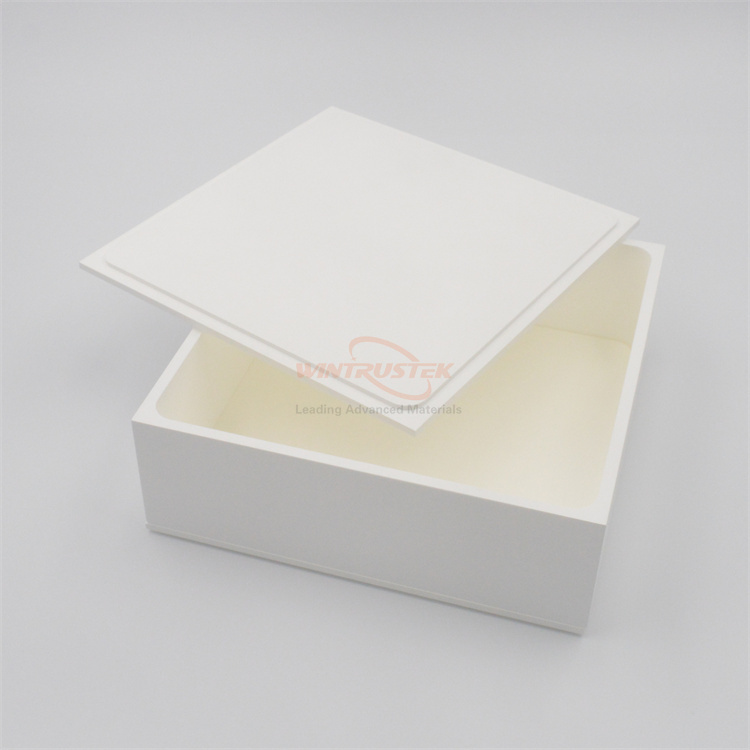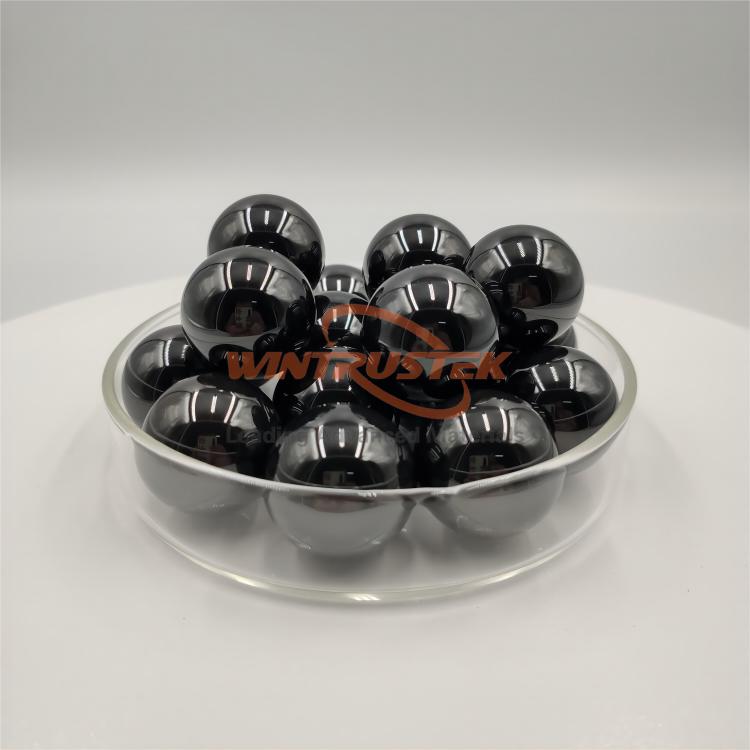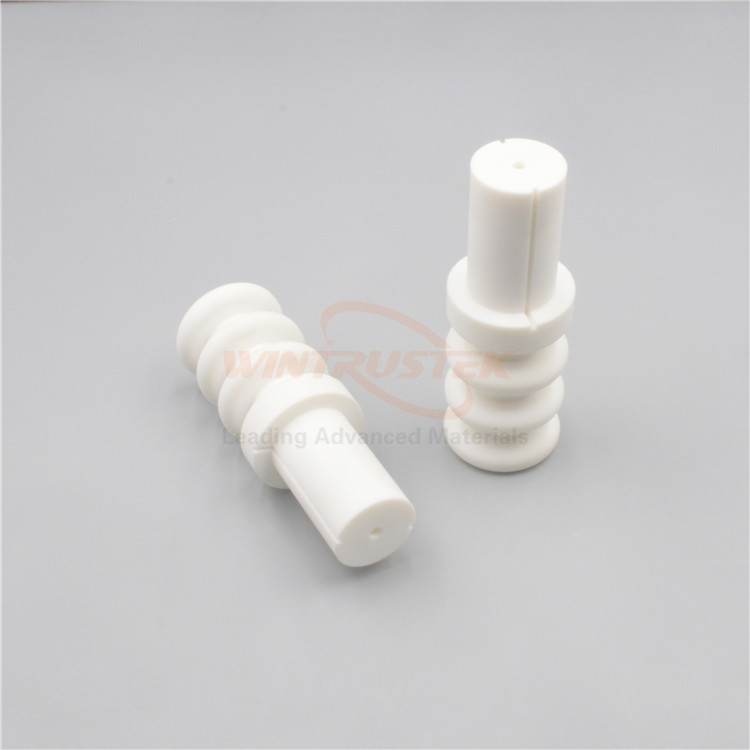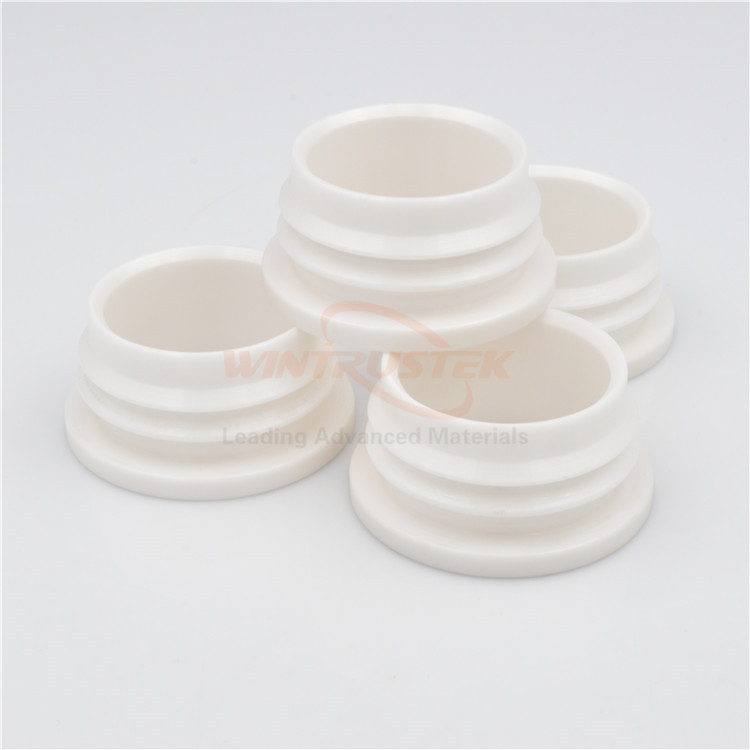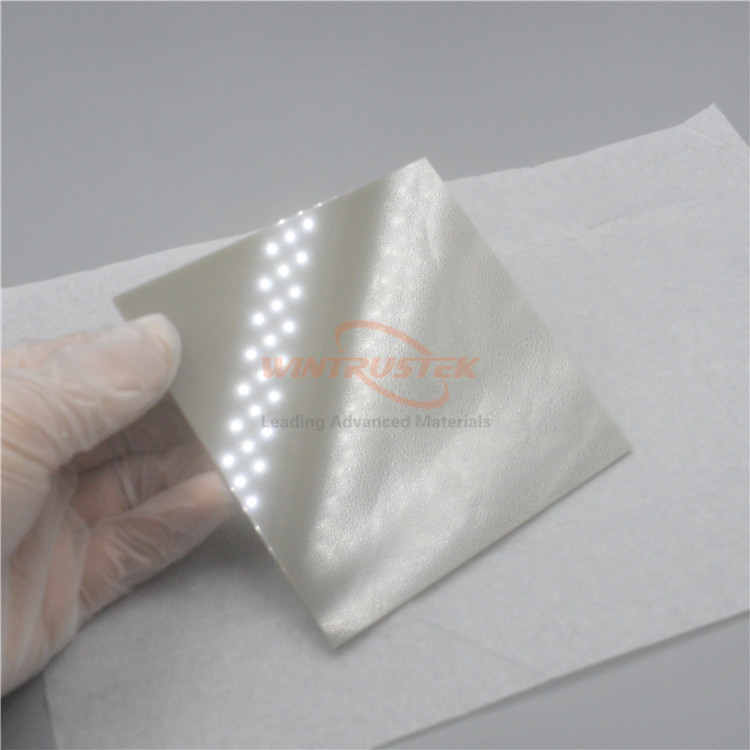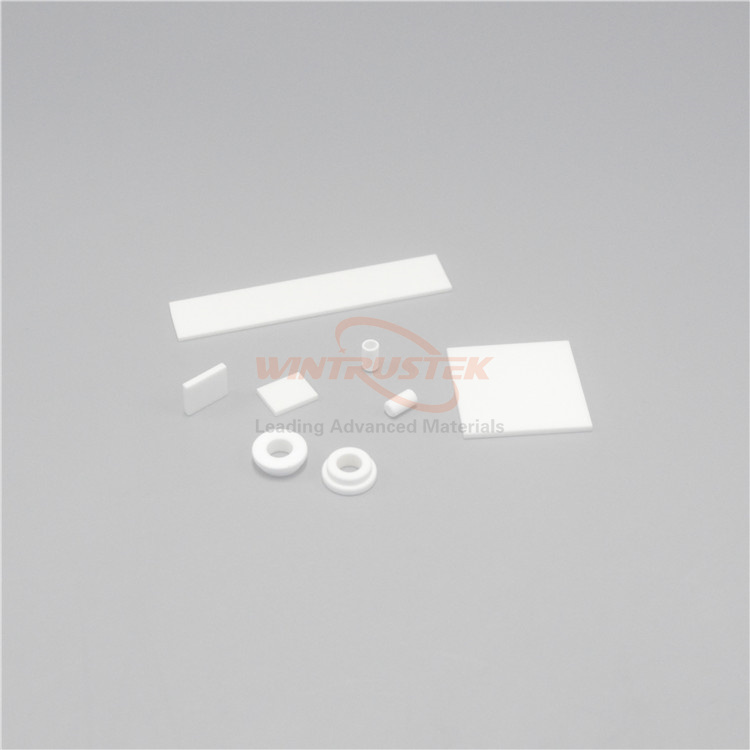
(BeO Parts Produced by Wintrustek)
As electronic devices trend toward higher power density and operating frequencies, and as the demand for extreme material performance intensifies in fields like nuclear energy and aerospace, thermal management has emerged as a critical factor limiting technological advancement. Beryllium oxide (BeO) ceramics, with their unique combination of properties—high thermal conductivity, high electrical insulation, high-temperature resistance, and excellent nuclear properties—have secured important applications in these fields. Despite challenges in toxicity management, their comprehensive performance advantages ensure they retain significant research and application value under current technological conditions.
Advantages:
1. High Thermal Conductivity
The most significant characteristic of beryllium oxide ceramics is their exceptionally high thermal conductivity. At room temperature, high-purity (over 99.5%) densely sintered beryllium oxide ceramics can have a thermal conductivity of 250–325 W/(m·K). This is significantly higher than that of alumina (25-35 W/(m·K)) and zirconia (2-3 W/(m·K)), and even exceeds that of some metals. This value decreases with temperature, yet remains above 100 W/(m·K) at 300°C.
2. High Electrical Insulation and Low Dielectric Loss
As a wide-bandgap semiconductor (approximately 10.6 eV), beryllium oxide exhibits extremely high volume resistivity (>1014Ω·cm) and a high dielectric strength (>10 kV/mm) at room temperature. Its dielectric constant is approximately 6.5-7.0 at 1 MHz, with a dielectric loss tangent below 0.0004 that remains stable over a wide frequency range. This low-loss characteristic provides a significant advantage in high-frequency circuit applications.
3. High Thermal Shock Resistance and Low Density
Beryllium oxide ceramics possess favorable mechanical properties, including a room-temperature flexural strength of approximately 170-230 MPa, a compressive strength of approximately 1500-2000 MPa, and an elastic modulus of approximately 310-350 GPa. Its low density (2.85-3.01 g/cm³)—approximately 70% that of alumina—provides a significant weight savings advantage in aerospace applications.
4. High Neutron Moderation Capability and Radiation Resistance
Beryllium oxide exhibits excellent neutron moderation capability, characterized by a very low thermal neutron absorption cross-section of only 0.0092 barn and a high scattering cross-section of 6.8 barn. Under fast neutron irradiation, it demonstrates good dimensional stability and retention of mechanical properties, with relatively mild irradiation swelling effects.
Applications:
1. Semiconductor Packaging and Heat Sink Materials: Beryllium oxide ceramic substrates are the preferred heat-dissipating packaging material for high-power semiconductor devices, such as IGBT modules, RF power transistors, and laser diode arrays.
2. Microwave Vacuum Electronic Devices: In broadband, high-power vacuum electronic devices, such as traveling wave tubes, beryllium oxide ceramics are used as support rods for slow-wave structures and as RF window materials.
3. Multi-chip Components and High-Frequency Circuits: Beryllium oxide ceramics are employed in high-performance, high-power microwave packages, high-frequency transistor packages, and high-circuit-density multi-chip modules.
4. Neutron Moderation and Reflection: Its exceptionally low thermal neutron absorption and high scattering cross-sections make it an effective neutron moderator and reflector in nuclear reactors.
5. Controlled Nuclear Fusion: Beryllium and its oxide are key materials in fusion reactor design, serving as neutron multipliers and plasma-facing materials in experiments like ITER.
6. Nuclear Fuel Matrix: As a fuel matrix material, combining beryllium oxide with nuclear fuel (e.g., UO₂) to form dispersion fuel elements enhances the composite's thermal conductivity, lowers the operating temperature of the fuel, and thereby improves overall reactor safety.
The production and handling of beryllium oxide (BeO) necessitate stringent safety measures due to its toxicity when inhaled as dust. BeO is known to be carcinogenic and can cause chronic berylliosis, a severe lung disease. This risk highlights the need for careful management during manufacturing processes, particularly when machining or handling the material in powder form.
BeO manufacture and handling require strict safety precautions due to its toxicity when inhaled as dust. BeO is a recognized carcinogen that can induce chronic berylliosis, a serious lung illness. This risk emphasizes the importance of cautious management throughout manufacturing operations, especially when machining or handling the material in powder form.
Safety protocols:
1. Enclosed Systems: BeO manufacturing and handling use enclosed systems to prevent dust from entering the atmosphere.
2. Air Filtration: BeO facilities use sophisticated air filtration systems to catch tiny pollutants and prevent worker inhalation.
3. Personal Protective Equipment (PPE): Workers must wear respirators, gloves, and protective clothes in regions where BeO dust may be present.
Regulatory Compliance:
1. Workplace Standards: Strict regulations limit the maximum permitted concentration of BeO in workplaces to guarantee worker safety.
2. Waste Management: Dispose of BeO items in accordance with hazardous waste management guidelines to avoid environmental contamination.
Health Monitoring: To guarantee early identification and treatment of any health problems resulting from exposure, workers handling BeO must undergo routine health examinations and keep an eye out for berylliosis symptoms.
Despite these challenges, BeO remains a viable material in a wide range of high-tech applications when safety measures are followed. To limit the dangers connected with BeO, the ceramic industry continues to develop and implement safer handling and processing procedures, with the goal of protecting workers and the environment while maximizing the material's benefits.