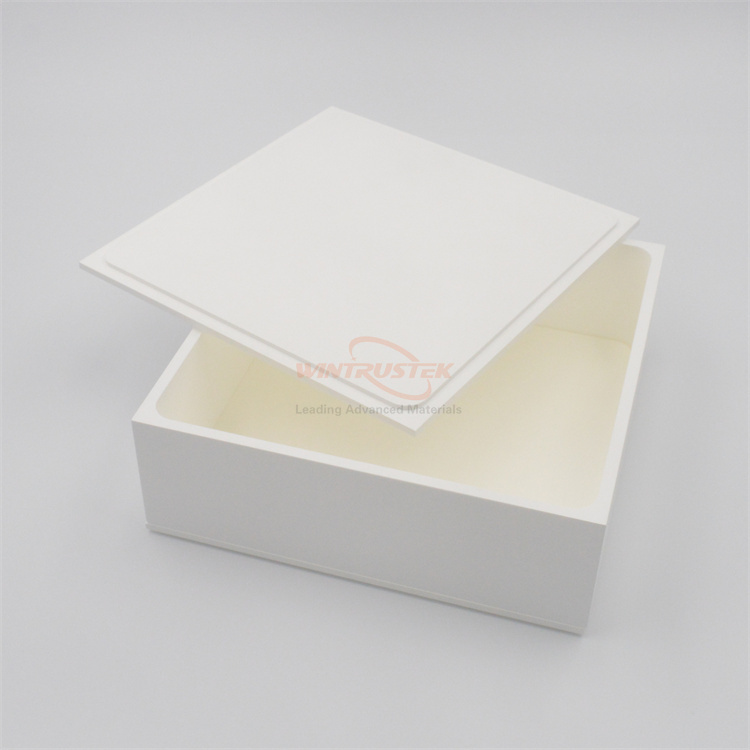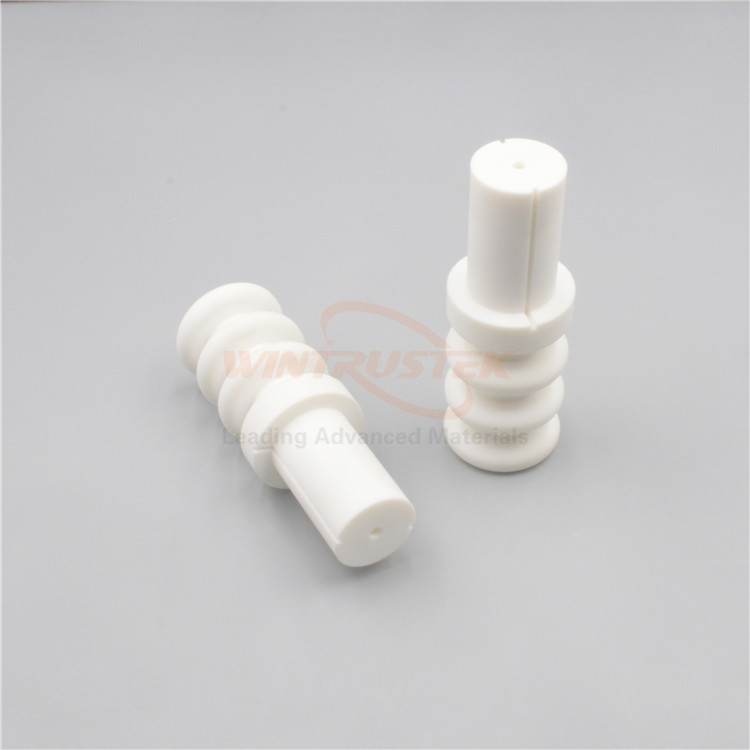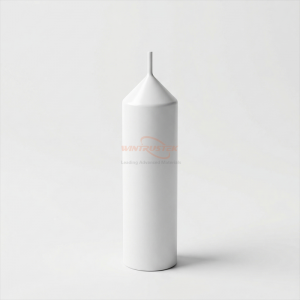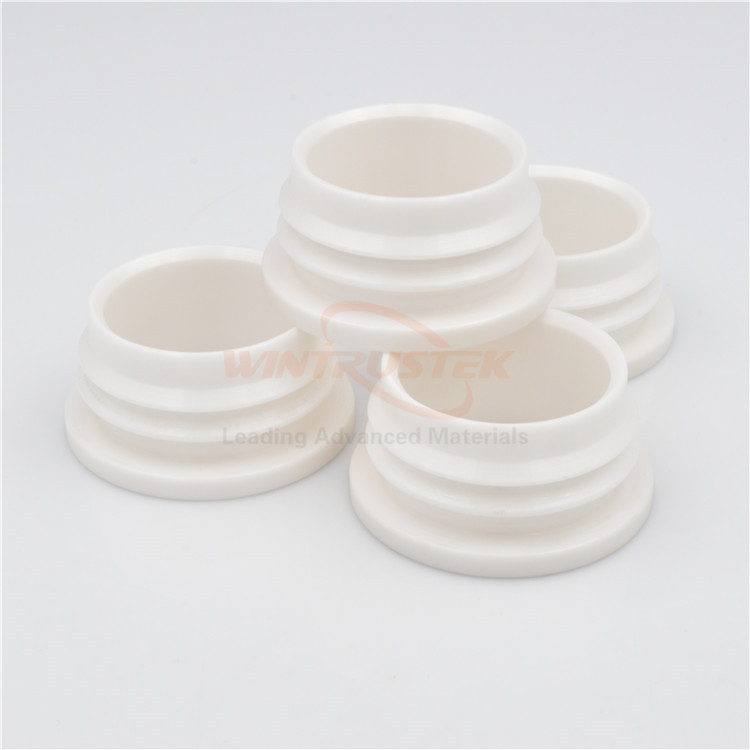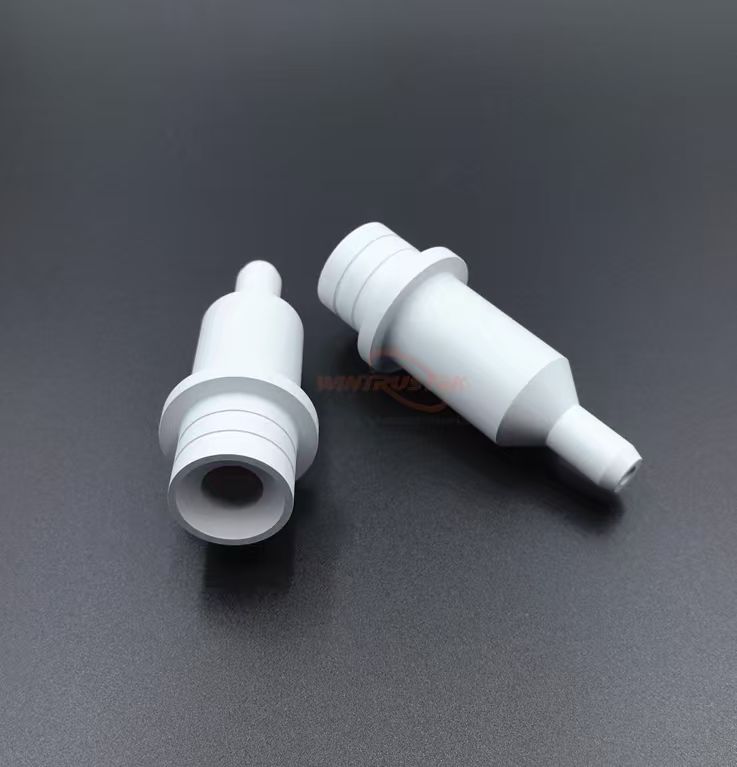
(BN Nozzle Produced by Wintrustek)
As one of the key components in a gas atomization system, the nozzle affects not only gas flow distribution and melt breakup behavior, but also powder size consistency, operational continuity, and overall production efficiency.
For metal powder manufacturers, process instability does not always come from the main equipment alone. Nozzle wear, thermal shock failure, melt adhesion. Under continuous operating conditions, frequent nozzle replacement increases maintenance costs, interrupts production rhythm, and affects batch-to-batch consistency. For this reason, selecting a nozzle material with better thermal stability and higher resistance to demanding process conditions has become an important way to improve atomization stability. Boron nitride nozzles have gained increasing attention in this context.
1.1 Good high-temperature resistance
During gas atomization, the nozzle operates in a high-temperature environment for extended periods. Boron nitride can maintain good structural stability under such conditions, helping preserve nozzle geometry and flow channel accuracy.
1.2 Strong thermal shock resistance
During startup, shutdown, and continuous operation, nozzles are exposed to rapid temperature changes. Boron nitride offers good resistance to thermal shock, reducing the risk of cracking or local damage.
1.3 High chemical stability
If a nozzle material reacts with molten metal, it may accelerate erosion and affect powder quality. Boron nitride generally shows good chemical inertness and remains stable in a range of metal processing environments.
1.4 Low wettability and anti-adhesion behavior
In some operating conditions, melt adhesion, residue buildup, and nodulation may occur around the nozzle, disturbing atomization performance. Boron nitride usually exhibits low wettability, which helps reduce sticking and local blockage.
2.1 Improving continuous production stability
For production lines aiming at long continuous operating periods, nozzle lifetime and stability directly affect downtime frequency. Due to its combined thermal and shock resistance, boron nitride is suitable for applications requiring extended stable operation.
2.2 Supporting better particle size consistency
Changes in nozzle condition can alter gas flow distribution and melt breakup behavior, resulting in particle size variation. Boron nitride nozzles can help maintain a more stable working condition over time, supporting better powder consistency.
2.3 Suitable for conditions prone to adhesion and buildup
In certain alloy systems or process settings, the nozzle surface is more likely to suffer from sticking and residue accumulation. The low wettability of boron nitride provides an advantage in such environments.
2.4 Reducing maintenance frequency and downtime loss
Frequent nozzle replacement increases not only consumable costs, but also the time required for disassembly, installation, calibration, and restart. For plants with high equipment utilization requirements, a more stable nozzle material can help improve operating efficiency.
2.5 Applicable to high-value powder production
In products such as additive manufacturing powders and high-performance alloy powders, production stability and batch repeatability are especially important. Boron nitride nozzles offer practical value in supporting a more stable process window.
3. Key Selection Considerations
In practical use, boron nitride nozzles should still be evaluated based on actual process conditions. The main points include:
Compatibility with the target alloy system
Nozzle structural design and machining accuracy
Actual service life and replacement interval
Real contribution to powder quality stability
4. Conclusion
In metal powder gas atomization, the nozzle may be small in size, but it is a critical factor in production stability. For manufacturers facing frequent shutdowns caused by nozzle replacement and limited production continuity, boron nitride nozzles represent a meaningful material option. Their high-temperature resistance, thermal shock performance, chemical stability, and low wettability give them potential value in improving continuous operation, reducing maintenance intervention, and supporting more consistent powder production.