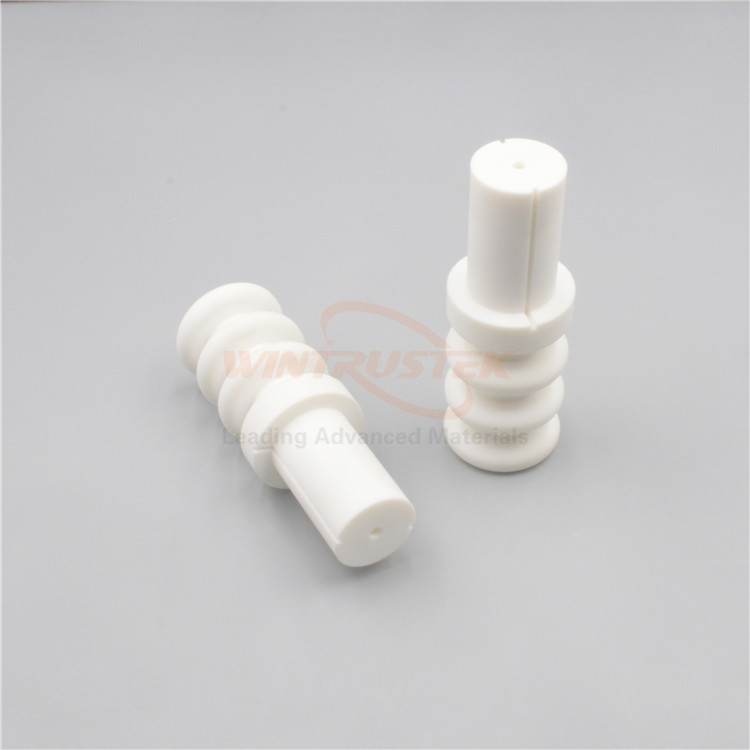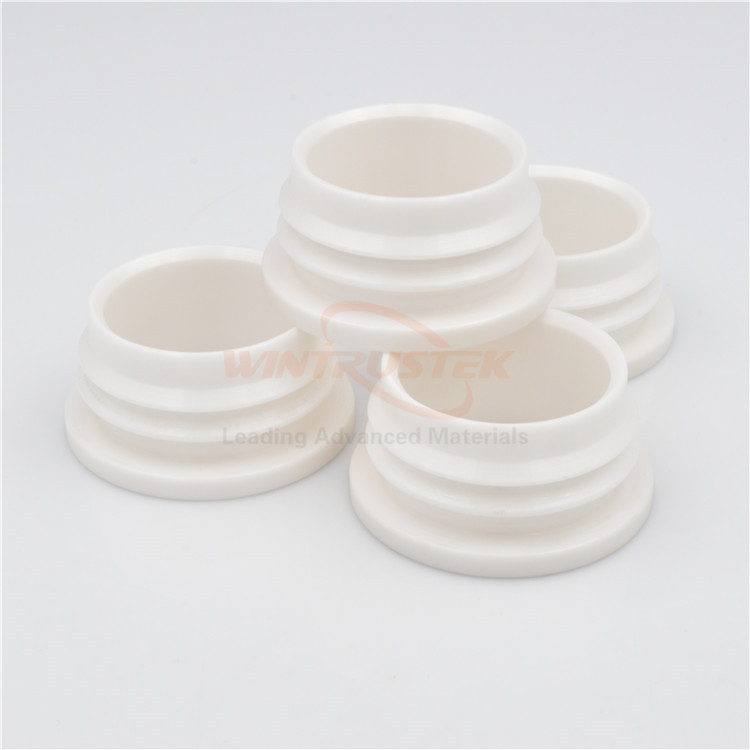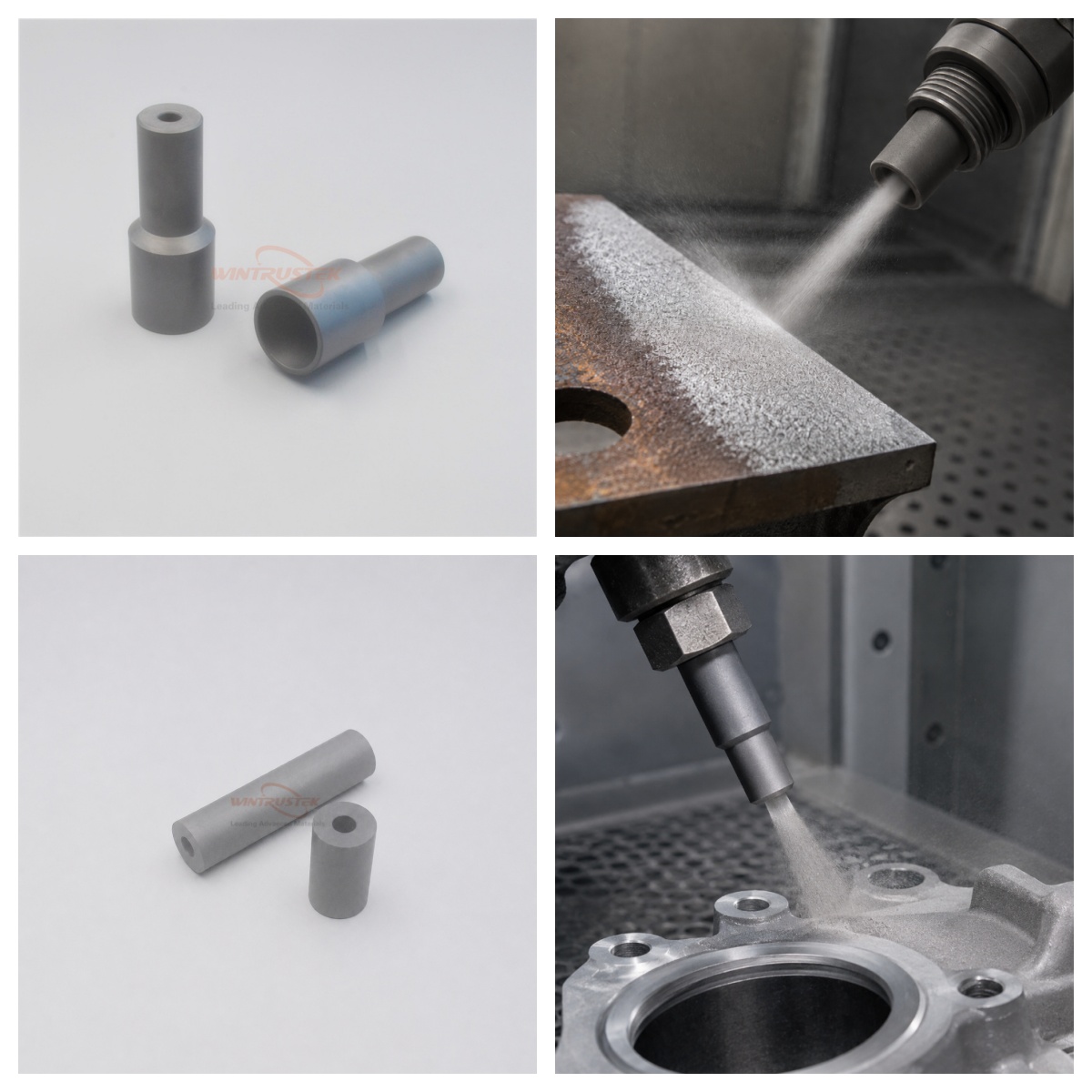
(Boron Carbide and Silicon Carbide Ceramic Nozzles Produced by Wintrustek)
Boron carbide and silicon carbide are two popular material choices for wear-resistant ceramic nozzles. Both materials exhibit great hardness, good wear resistance and strong chemical stability. However, they vary in hardness, density, resistance to oxidation, resistance to impact, cost of manufacture, and conditions of service. A mix of abrasive type, blasting pressure, operation frequency, nozzle design, budget and estimated service life is a good starting point for the proper choice of abrasives for sandblasting and abrasive blasting applications.
1. Working Conditions of Sandblasting and Abrasive Blasting
Sandblasting and abrasive blasting are commonly used for industrial surface cleaning and pre-treatment in the metal processing, ship repair, aerospace and paint preparation industries. They employ pressurized air or water to propel abrasives to remove rust, deburr and roughen surfaces.
Common abrasives are alumina grit, silicon carbide grit, steel grit, glass beads, garnet and ceramic media. The different abrasives have variable hardness, particle size, particle shape and impact behavior, which causes different wear rates on the bore of the nozzle. If the nozzle bore enlarges or deforms more rapidly under high pressure, continuous operation or extremely abrasive media, a less focused blasting stream will result.
This is why nozzle materials must be very hard, with good resistance to abrasive wear and dimensional stability, as well as a certain resistance to thermal and mechanical shock.
2. Material Characteristics of Boron Carbide Nozzles
Boron carbide is a typical superhard ceramic material with properties including ultra-high hardness, low density and exceptional wear resistance. It is second only to diamond and cubic boron nitride in hardness and is hence very resistant to erosion by abrasive particles in high velocity blasting conditions.
Main characteristics include:
3. Material Characteristics of Silicon Carbide Nozzles
The silicon carbide ceramic also exhibits great hardness and good wear resistance, together with strong thermal conductivity, oxidation resistance and high-temperature stability. Silicon carbide has a little lower hardness than boron carbide but delivers a more balanced mix of performance and cost.
Main characteristics include:
Good hardness and wear resistance
Good thermal conductivity
Good oxidation resistance and high-temperature stability
More cost-effective
Balanced overall performance
Material grade should be confirmed
Weight: Boron carbide is less dense, which is more suited for portable equipment and lightweight applications. Silicon carbide is denser, but yet relatively light engineering ceramic.
Thermal performance: Silicon carbide has the advantages of high thermal conductivity and high temperature stability, which is helpful for applications under the condition of local temperature rise or thermal shock.
Impact resistance: Both materials are ceramics and are not appropriate for heavy impact or improper mounting stress.
Overall cost performance: Boron carbide is more suitable for high wear and long life applications while silicon carbide is often more cheap for normal or medium wear applications.
5. How to Select the Right Material for Different Applications
Hard abrasive media: In applications with the use of harsh abrasives and continuous usage of the equipment over lengthy periods, boron carbide nozzles are typically suggested. Less bore wear and longer replacement intervals result from their increased wear resistance.
General sandblasting and surface cleaning: Silicon carbide nozzles often can match the performance requirements for general sandblasting, rust removal, surface cleaning, coating preparation or medium intensity abrasive blasting with superior cost effectiveness.
Handheld blasting equipment: Boron carbide has the benefit of low density and being lightweight . For portable equipment when weight is an issue .
6. Conclusion
Both boron carbide and silicon carbide nozzles are suitable for sandblasting and abrasive blasting applications but are better suited to different operating environments. Boron carbide is better for hard abrasives, severe wear, long life needs and lightweight uses. Silicon carbide is superior for general to medium-high intensity abrasive blasting especially when cost management and big volume use are important.