Commercial printers and high speed Multi-Function Printers (MFPs) are part of today's workplace automation environment, therefore consumers anticipate short first page out times (FPOT) and fast continuous print speeds. The secret ingredient is this ceramic heater in the fixing or fuser unit which instantly melts the toner to the paper.
Ceramic heating elements have so far been produced on alumina (Al2O3) substrates. Conventional alumina substrates, however, are limited in thermal conductivity causing to sluggish heat-up cycles and uneven toner melting. Today's laser printers are built with faster printing capacity (more than 40 to 60 pages per minute) and less energy usage.
Tier-1 printer manufacturers and heating element integrators are turning to Aluminum Nitride (AlN) ceramic substrates to overcome these performance restrictions.
Aluminum Nitride has a thermal conductivity 7 to 8 times greater than alumina, allowing ultra-fast thermal response, uniform temperature distribution and outstanding energy efficiency.
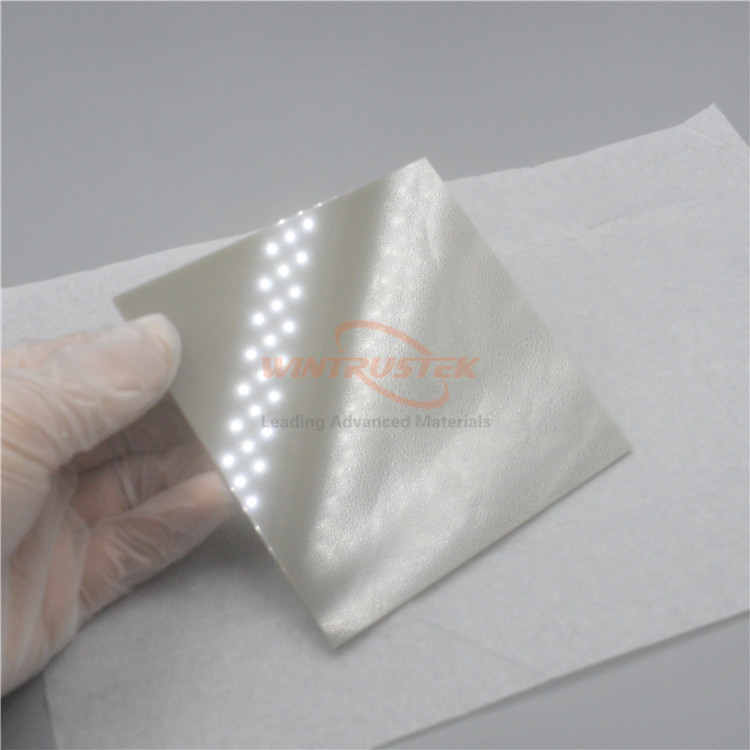
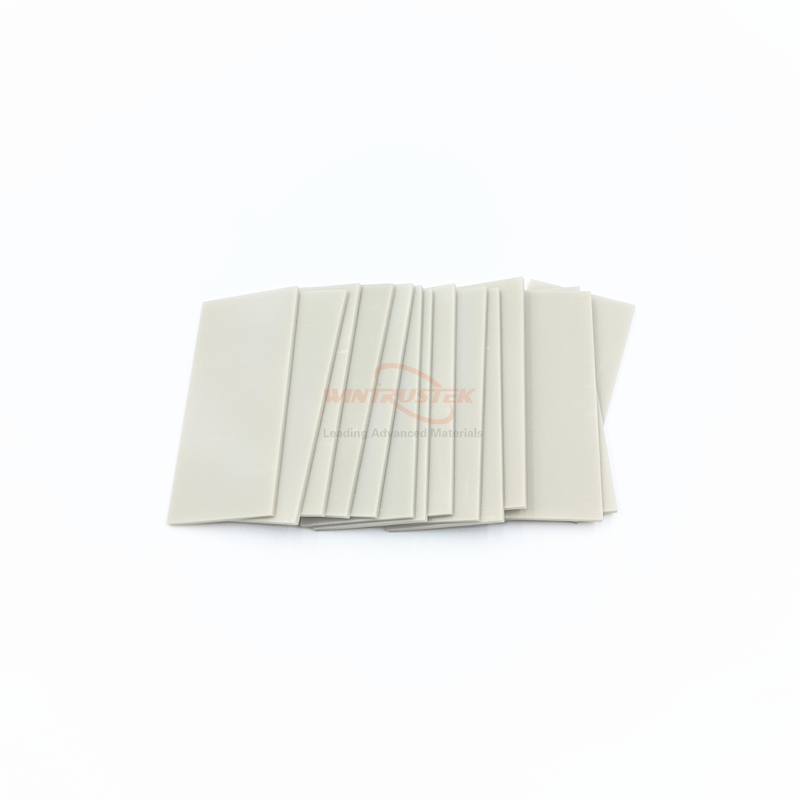
At Wintrustek we manufacture high purity precisely machined Aluminum Nitride (AlN) ceramic substrates suited for laser printer fuser heaters, thermal print heads and high speed heating modules.
1. Basic thermal problem of fixing assembly of laser printers
When a print job is initiated, the fixing assembly of a laser printer should rapidly heat the fuser heater to the operational temperatures (often 180 °C to 220 °C) in less than one second.
Traditional alumina substrates have some operational problems:
FPOT (First Page Out Time) is slow: The low thermal conductivity of alumina (24 to 30 W/m∙K) slows down the heat transmission from the resistive heating film to the fuser belt, therefore creating lengthier FPOT for the users.
Thermal Stress and Hot Spots: Rapid power cycling produces large temperature differential across alumina substrates that can result in thermal shock cracking and uneven toner adherence.
Higher Power Consumption: Poor thermal response requires more continuous power input to maintain temperature, which is contrary to new Energy Star efficiency regulations.
2. The best substrate for Fuser Heaters is Aluminum Nitride (AlN)
Aluminum Nitride has the thermal conductivity of a metal and good electrical insulating characteristics making it the ideal material for high speed fuser heating elements:
A. High thermal conductivity (very fast heating time)
Wintrustek AlN substrates have a good thermal conductivity of 170-200W/m∙K. Since the generated heat in the screen-printed thick film resistance layer is directly transferred to the fuser belt by the thin AlN substrate, there is almost quick heating and a considerable reduction of FPOT.
B. Good resilience to thermal shock
Laser printer heaters suffer tremendous thermal cycling – from ambient temperature to over 200 °C in milliseconds. AlN has the high thermal conductivity and low thermal expansion coefficient (4.5 ppm/K), which suppresses micro-cracking or structural deformation during rapid heating and cooling cycles.
C. Uniformity of temperature across the widths of paper
If the fuser heater is not heating evenly, the paper will get distorted, the toner will smear and the print quality will be uneven. The AlN is able to dissipate heat evenly and quickly along the whole length of the heater bar, ensuring consistent toner melting from edge to edge.
D. Reliability and Dielectric Strength
AlN has strong dielectric strength (>15kV/mm) and high volume resistivity at high temperature with good electrical isolation between the heating circuit and external metal parts.
3. Wintrustek Precision Manufacturing Capability
Laser printer heater bars are generally quite long and narrow and thin (e.g. 200mm to 350mm long, 5mm to 10mm broad and 0.635mm to 1.0mm thick). To realize these thin AlN substrate without warpage, stringent process controls are necessary:
High Precision Laser Processing: Ultra-tight dimensional tolerances and smooth edges without micro-cracks are achieved by using state-of-the-art laser scribing and cutting technology.
Superior Surface Flatness: Our innovative lapping and polishing procedures achieve surface flatness to tight tolerances for high-yield thick film resistor printing (Ag/Pd or RuO2 pastes).
Custom Metallization & Shape Fabrication: Wintrustek supplies to its customers raw AlN strips, or pre-metallized or surface prepared substrates to customer specifications.
Wintrustek Partners With Next Generation Office Automation
Moving to Wintrustek Aluminum Nitride (AlN) heating substrates provide a distinct competitive edge as commercial laser printers and MFPs get quicker, use less energy and need smaller footprint requirements.
Contact our technical team immediately for a consultation, samples of AlN substrates or to discuss special specs for laser printer heaters at sales@wintrustek.com.